Tools & Ingredients
Do You Really Need a Dutch Oven to Bake Bread?
A Dutch oven helps trap steam for a crackly crust, but it's not your only option. Here are the best alternatives for baking great bread at home.
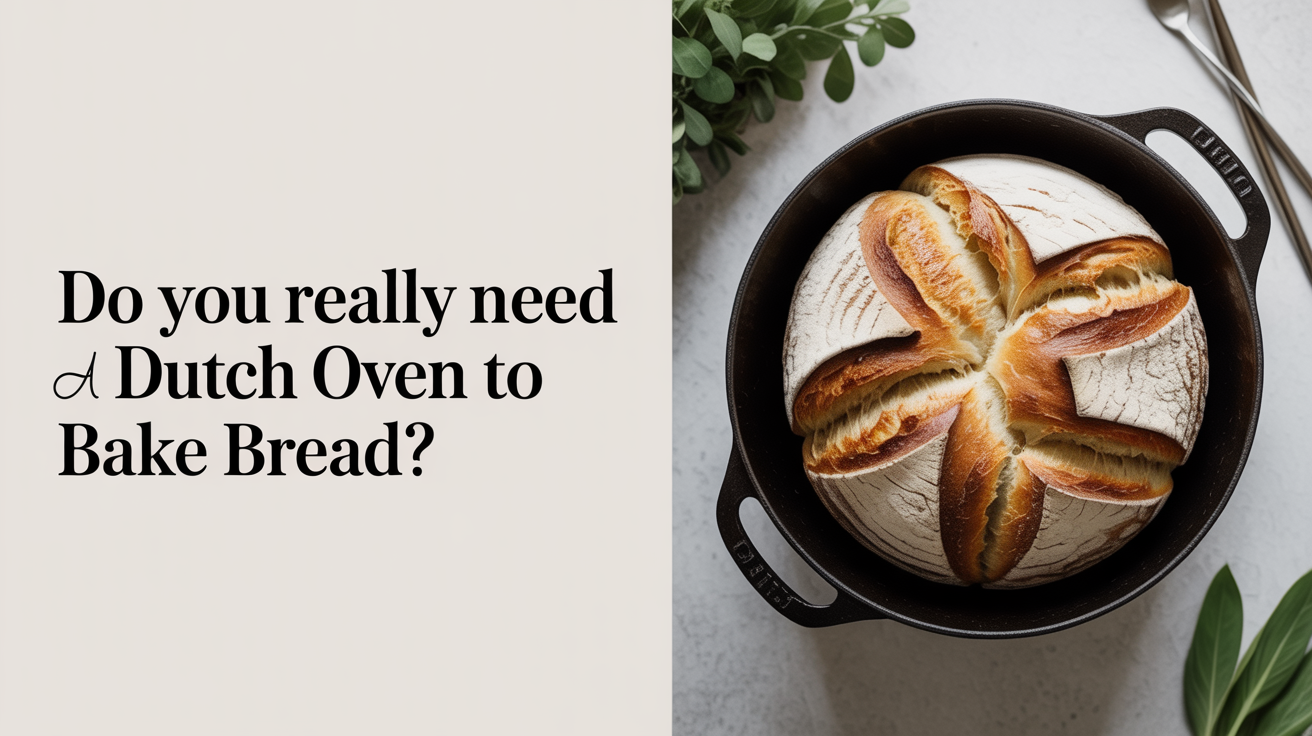
You don't need a Dutch oven to bake bread. But there's a real reason it became the go-to tool for home bakers, and understanding that reason will help you get a great loaf no matter what equipment you're working with.
The short version: bread needs steam in the first 15 minutes of baking. Steam keeps the crust soft long enough for the loaf to expand fully before it sets. Without it, the crust hardens too early and you end up with a dense, pale loaf that didn't get to open up the way it should. A Dutch oven traps the steam your dough releases naturally, which turns it into a tiny hearth oven inside your home oven. That's the whole trick.
Why a Dutch Oven Works So Well
When you drop a shaped, proofed loaf into a screaming-hot Dutch oven and clamp the lid on, the moisture coming off the dough has nowhere to go. It stays right there in the pot and bathes the loaf in steam for the first part of the bake. The crust stays pliable, oven spring is strong, and the score you made on top opens up dramatically. Then you pull the lid off for the last 15 to 20 minutes and let the crust brown and crisp up.
Bakeries get the same effect using deck ovens that inject steam on a timer. A Dutch oven is a low-tech way to replicate that for a single loaf.
There's also a preheating factor. Cast iron holds an enormous amount of heat. When cold dough hits a 500°F pot, the bottom of the loaf gets a burst of bottom heat that helps with oven spring too. Some bakers skip preheating the Dutch oven (so the dough doesn't stick), and that approach works fine, though you lose a bit of that bottom browning.
What to Look For If You're Buying One
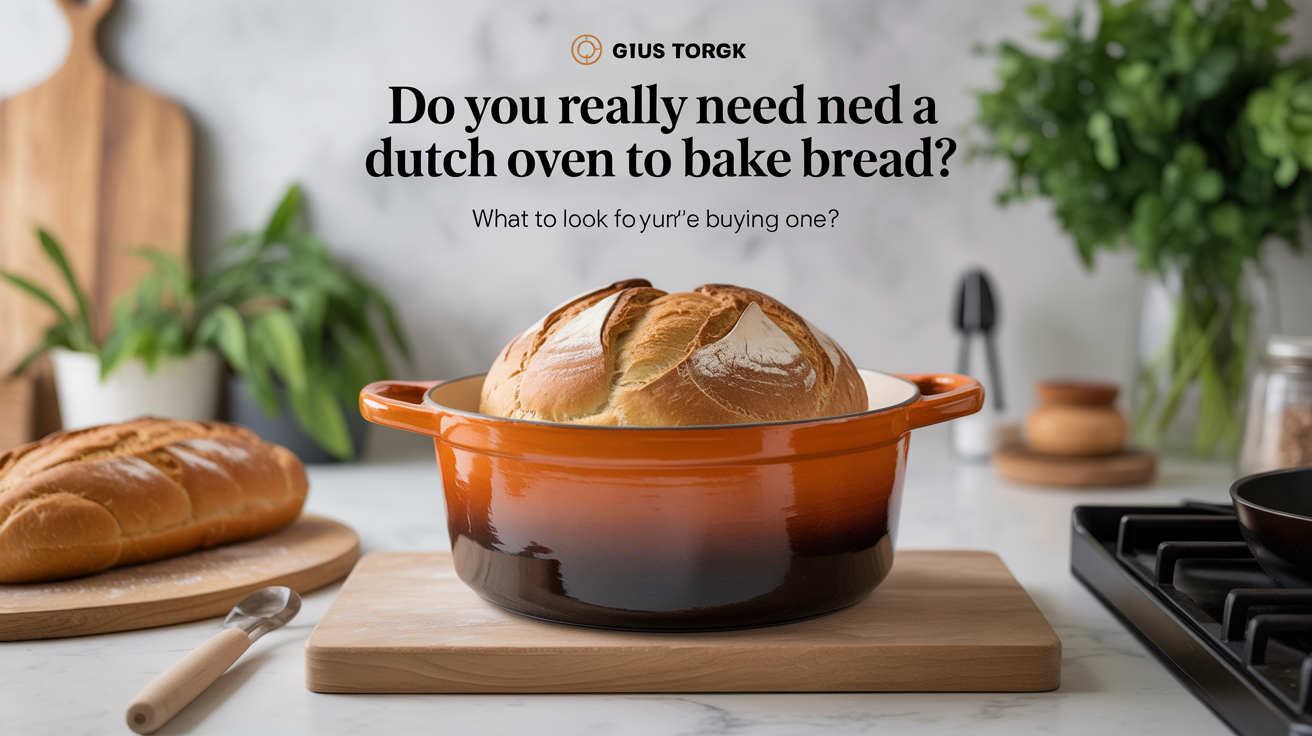
If you decide you want a dedicated Dutch oven for bread, here's what actually matters:
Size
A 5-quart pot is the sweet spot for most standard loaves. A 4-quart works for smaller loaves (around 600 to 700 grams of dough). Go to 6-quart if you regularly bake bigger batards or want room to maneuver when loading the dough. Anything much larger and the steam disperses too much to do its job.
Enamel-coated vs. bare cast iron
Enamel-coated Dutch ovens are easier to clean and won't react with acidic dough. They're also heavier on the wallet. Bare cast iron costs less but requires more care to keep seasoned, and can sometimes give the crust a faint metallic taste until the seasoning builds up. Either works well for bread. A light-colored enamel interior is a small bonus because you can see browning more clearly.
Oven-safe lid and handle
Most Dutch oven lids are rated to 450 or 500°F, but check your specific model. Some knobs are plastic and will melt. If yours has a plastic knob, swap it out for a stainless steel replacement screw (a hardware store is cheaper than buying a new lid). Also check that the lid handle doesn't stick up too high, or it may hit the oven rack above it.
Safety note: a preheated Dutch oven is genuinely dangerous. Use thick oven mitts or silicone gloves with wrist protection, move slowly, and set the pot on a stable surface before loading dough. Dropping a cold dough blob into a 500°F pot is startling. Keep a folded kitchen towel under the pot while you work so you don't accidentally set it on a counter that can't handle the heat.
How to Bake Bread Without a Dutch Oven
If you're just starting out and don't want to buy new equipment yet, you have several solid options. Each one is trying to solve the same steam problem, just differently.
The comparison table below covers the main approaches at a glance.
| Method | How it creates steam | Pros | Cons |
|---|---|---|---|
| Dutch oven | Traps dough's own steam | Consistent, hands-off, great crust | Cost, heavy, only one loaf at a time |
| Steam pan + baking stone or steel | Pour boiling water into a hot pan | Works for any shape, can do two loaves | Oven steam isn't contained; results vary |
| Inverted metal bowl or roasting pan | Acts as a cloche over the loaf | Uses gear you already own | Bowl can't go too small or loaf crowds it |
| Ceramic bread cloche | Purpose-built cloche traps steam | Excellent results, handles well | Similar cost to a Dutch oven |
| Covered roasting pan | Lid traps steam like a Dutch oven | Works for batards and boules | Lid seals less tightly; less consistent steam |
The Steam Pan Method
This is the most common substitute. Put a baking stone or heavy baking sheet on the middle rack and a cheap metal pan (a cast iron skillet or a rimmed sheet pan work) on the bottom rack. Preheat everything at the highest temperature your oven goes (usually 450 to 500°F) for at least 45 minutes. When you load the bread, pour about a cup of boiling water into the bottom pan and quickly shut the oven door.
The steam escapes the pan and fills the oven cavity. It's not as concentrated as a Dutch oven, but if your oven is reasonably tight, it can work well. After 15 to 20 minutes, open the oven to let the steam out and finish the bake uncovered.
One gotcha: pouring water into a very hot oven creates a sudden cloud of steam that can burn your arms. Pour carefully and step back. And use a pan you don't mind warping, because the thermal shock is hard on cheap sheet pans.
The Inverted Metal Bowl Trick
Place your shaped loaf on a piece of parchment on a baking sheet. When you're ready to bake, set a large stainless steel or aluminum mixing bowl upside down over the loaf. The bowl traps the steam just like a lid. After 15 to 20 minutes, use tongs to carefully lift the bowl off (it will be extremely hot) and finish baking uncovered.
This works surprisingly well. The bowl doesn't seal perfectly, so some steam escapes, but enough stays in to get decent oven spring. The size matters: you want the bowl large enough that the loaf can rise without touching the sides.
Don't use a glass bowl for this. Thermal shock can crack it.
A Baking Cloche
A bread cloche is a ceramic or clay dome designed exactly for this purpose. You preheat the base and dome separately, load the loaf onto the base, and cover with the dome. It functions nearly identically to a Dutch oven for round boules and some oval shapes.
The results are genuinely excellent. The downside is the price, which is comparable to a mid-range Dutch oven, so you're not saving money, just getting something purpose-built for bread.
A Covered Roasting Pan
A large roasting pan with a tight lid can work for longer batard-shaped loaves that won't fit well in a round Dutch oven. Preheat the pan, load the loaf, cover, and proceed as you would with a Dutch oven. The seal isn't usually as tight, so results can be a little less consistent, but it's a reasonable option if you have one sitting in a cabinet.
Getting the Rest of the Process Right
Steam is important, but it's one variable among several. Two things that matter at least as much: your ingredients and your measurements.
On ingredients: if you're using all-purpose flour and wondering why your loaves come out soft and flat, bread flour vs all-purpose flour is worth understanding before your next bake. The higher protein content in bread flour develops more gluten structure, which directly affects how much your loaf rises and how the crumb opens up.
On measurements: volume measuring cups for bread ingredients are genuinely unreliable. A cup of flour can vary by 30% depending on how you scoop. If you're serious about consistent results, a kitchen scale makes a real difference for bread baking and costs less than a Dutch oven.
And if you're putting together your baking setup from scratch, a practical list of essential bread baking tools for beginners will help you prioritize what's actually worth buying versus what can wait.
Frequently Asked Questions
Can I bake sourdough without a Dutch oven?
Yes. Sourdough benefits a lot from steam because the crust needs time to stay soft during a long oven spring. The inverted bowl method or a steam pan with a baking stone both work, though a Dutch oven gives you the most reliable results. If you're just starting with sourdough, the steam pan method is a fine way to get going without buying anything new.
What size Dutch oven should I use for a standard sourdough boule?
For a loaf made with 400 to 500 grams of flour, a 4 to 5 quart pot fits well. The loaf needs room to expand without pressing against the sides, but too large a pot lets the steam dissipate. A 5-quart round Dutch oven covers most home baking recipes comfortably.
Can I use a slow cooker insert as a Dutch oven for bread?
Slow cooker inserts are ceramic and usually not rated for the high temperatures used in bread baking (450 to 500°F). They can crack. Stick to cast iron or enamel-coated cast iron rated for oven use.
Does the Dutch oven need to be preheated?
Preheating gives you more aggressive bottom heat and better oven spring, but it's not required. Cold-start Dutch oven baking (loading the dough into a cold pot and putting it straight in the oven) works and is popular because it's safer and easier to load. The crust is slightly less cracky but still good. Try both and see which you prefer.
What's the best material for a Dutch oven used for bread?
Enameled cast iron is the most popular choice, and for good reason. It heats evenly, holds heat well, doesn't require seasoning, and cleans up easily. Bare cast iron is cheaper and also works well once it's well-seasoned. Carbon steel Dutch ovens are lighter but less common. Avoid thin-walled pots, aluminum, or non-oven-safe materials.