Technique & Science
How to Score Bread (and Why Your Loaf Needs It)
Learn how to score bread before baking, why it controls oven spring, which tools work best, and three simple patterns any beginner can pull off.
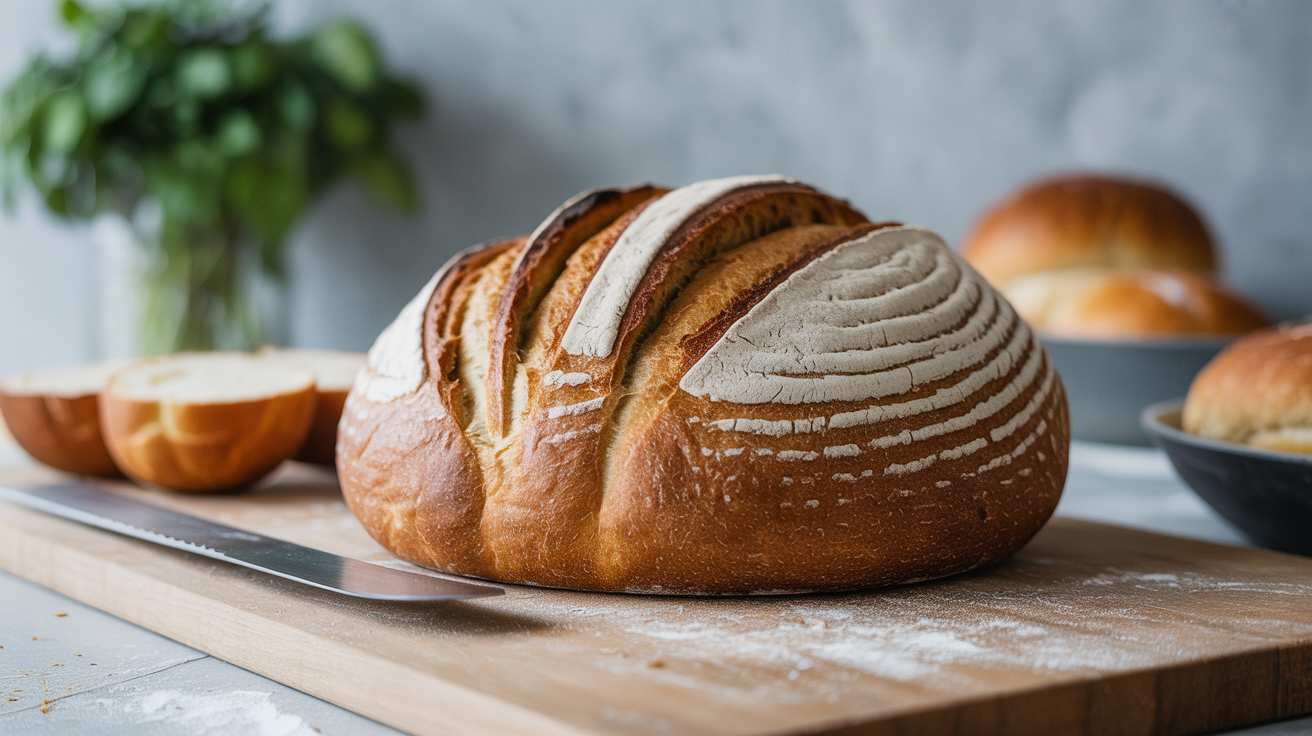
Scoring is the cut you make across the top of shaped dough just before it goes into the oven. It looks purely decorative, but it does a real structural job -- and skipping it is one of the most common reasons a first loaf blows out sideways instead of rising tall.
Why You Need to Score Bread
During the first ten to fifteen minutes in a hot oven, bread goes through what bakers call oven spring. The yeast activity spikes from the heat, gases expand fast, and the interior of the loaf tries to grow in every direction at once.
If the surface has no intentional weak point, pressure finds its own exit, usually through whatever seam or thin spot it can force open. The result is a loaf that bursts along the side or bottom rather than the top, with a ragged tear instead of a clean rise. The interior crumb can also end up dense because the expansion was restricted.
A deliberate score gives the dough a planned path. Gas escapes through that opening, the crust folds back and sets, and you get a controlled rise. This is why scoring sourdough is especially important: a stiff, cold sourdough crust can trap gas aggressively, and the pressure needs somewhere to go.
Understanding how hydration affects your dough's behavior during this phase is worth reading about. Higher-hydration doughs tend to spread more readily, while stiffer doughs build more internal pressure. See what is dough hydration and why it matters for a fuller picture of how water content shapes the loaf.
Tools for Scoring Bread
You do not need specialized equipment to score, but the tool matters more than most beginners expect.
| Tool | Best for | Notes |
|---|---|---|
| Lame (bakers' blade on a handle) | Sourdough, artisan loaves | Curved blade creates the ear; replaceable razor blades |
| Single-edge razor blade | Any loaf | Cheap and sharp; harder to hold for angled cuts |
| Sharp serrated knife | Softer yeasted loaves | Gentler on dough that would tear with a razor |
| Scissors (kitchen shears) | Rolls, baguettes, decorative cuts | Snip at 45 degrees into the top |
A dedicated lame (pronounced "lahm") is the go-to tool for scoring sourdough and crusty boules. The blade is thin enough to glide through surface tension without dragging. A standard razor blade works almost as well but gives you less control because there is nothing to grip at an angle.
A sharp serrated bread knife is fine for softer sandwich loaves or enriched doughs. The teeth cut through without compressing the dough too much. Avoid using a dull knife of any kind: it drags and deflates more than it scores.
Whatever you use, replace or re-sharpen it regularly. A blade that has cut a few loaves is already noticeably duller than a fresh one, and that dullness shows up in ragged cuts.
Scoring Technique: Angle, Depth, and Timing
Blade Angle and the Ear
The angle of your blade determines whether you get an ear or a decorative pattern. An ear is the flap of crust that lifts and curls back during baking, giving a rustic boule its signature ridge.
To create an ear, hold the lame at roughly 30 to 40 degrees from the surface (nearly parallel to the loaf) and score in one confident motion from one end to the other. Because the blade is angled low, it cuts under the surface layer rather than straight through it. That undercut piece lifts up in the oven heat and becomes the ear.
For decorative cuts -- a cross, a leaf pattern, or a series of diagonal lines -- you score at closer to 90 degrees, straight down into the dough. These cuts open more symmetrically and do not produce an ear, but they still give the gas a release point. Decorative scoring is easier for beginners because a 90-degree cut is more forgiving of a shaky hand.
How Deep to Score
The standard depth for a single-cut score is about a quarter to half an inch (roughly 6 to 13 mm). Too shallow and the cut seals back over before the crust sets; the loaf still blows out. Too deep and you destabilize the shaped dough structure you worked to build.
For decorative wheat or leaf patterns, lighter cuts of around 3 to 5 mm work better since they are meant to open gently rather than fully spread.
Why Cold Dough Scores Cleaner
One of the most practical things you can do to get better scores is to bake straight from the refrigerator. When shaped dough is cold, the surface is firmer, the gluten is tighter, and the blade glides through cleanly with minimal drag. Room-temperature dough is softer and stickier, which means the blade can snag and tear rather than cut.
This is a built-in benefit of cold retarding: a shaped boule or batard left in the fridge overnight becomes significantly easier to score. If you have been struggling with messy cuts, the dough temperature is often the first thing to address before changing anything else about your technique.
Simple Beginner Bread Scoring Patterns
When you are just starting out, keep the pattern simple. Complicated wheat sheaves or lattice designs are hard to execute quickly, and scoring needs to happen fast before the dough warms or deflates.
Single slash. One straight cut at 30 to 40 degrees for a round boule or along the length of a batard. This is the easiest way to get a reliable ear. Start a few inches in from one end, move in a single smooth pass, and stop a few inches from the other end.
Cross or hash. Two cuts at 90 degrees forming a cross or an X. Good for round loaves when you want even expansion in all directions. Each cut should be roughly two-thirds the width of the loaf. No ear forms, but the loaf rises symmetrically and the pattern is easy to repeat consistently.
Three diagonal lines. Three parallel cuts at a slight angle across a baguette or oval loaf. This is a classic pattern for yeasted breads and still works well for lower-hydration sourdoughs. Cut at 90 degrees for clean open lines.
Start with the single slash and get comfortable with your blade angle before adding complexity. Good scoring comes from practice and a sharp blade, not from choosing an ambitious pattern.
Working with well-developed dough gives you a better surface to score. See how to knead bread dough by hand and know when it's done if you are unsure whether your dough has enough structure before shaping.
How Hydration and Recipe Ratios Affect Scoring
Very wet doughs (above 80% hydration) can be slippery and soft at the surface, which makes clean scoring harder regardless of blade sharpness. If you find the blade dragging or the dough spreading as you cut, the hydration level is worth examining.
Stiffer doughs around 65 to 70% hydration hold their shape better during scoring and tend to produce cleaner, more defined cuts. If you are new to baking, starting with a lower-hydration recipe gives you more margin. Baker's percentages explained: how to read and scale any recipe covers how to read the water ratio in a recipe so you know what you are working with before mixing.
Frequently Asked Questions
Do I need to score all bread, or just sourdough? Scoring benefits any bread with a firm crust, including yeasted boules and baguettes. Sandwich loaves baked in a pan are partly contained by the pan walls, so they do not need scoring as much, though a single center cut helps a pan loaf open evenly across the top.
What if my score seals up in the oven and the loaf blows out anyway? The two most common causes are a score that was too shallow and a blade that was not sharp enough. Try going a bit deeper (up to half an inch for the main slash) and use a fresh razor blade. Baking the dough colder also helps the score stay open longer before the crust sets.
Can I score with a regular kitchen knife? A thin, very sharp chef's knife or a sharp serrated bread knife works on softer doughs. For a stiff sourdough, the blade needs to be thin enough to cut without dragging. A standard table knife or a thick blade will compress and deflate the dough rather than cut it cleanly.
Does scoring affect the crumb texture inside the loaf? Scoring affects how evenly the loaf expands, which does influence the crumb. A well-scored loaf that expands through the intended cut tends to have a more open, even crumb because the gas was released in a controlled direction. An unscored loaf that blows out irregularly often has uneven density, with tight spots where the structure was compressed.
When exactly should I score before loading into the oven? Score the dough right at the moment you are ready to load it. Have the oven fully preheated and the Dutch oven (if using one) already hot. Score, then load within about thirty seconds. If you score too early, the cut can start to dry out and close slightly; if the oven is not ready when you score, the dough keeps proofing and becomes harder to handle.