Technique & Science
What Is Dough Hydration and Why It Matters
Learn what dough hydration means, how to calculate it, and how it shapes your bread's crumb, crust, and handling from beginner to advanced bakes.
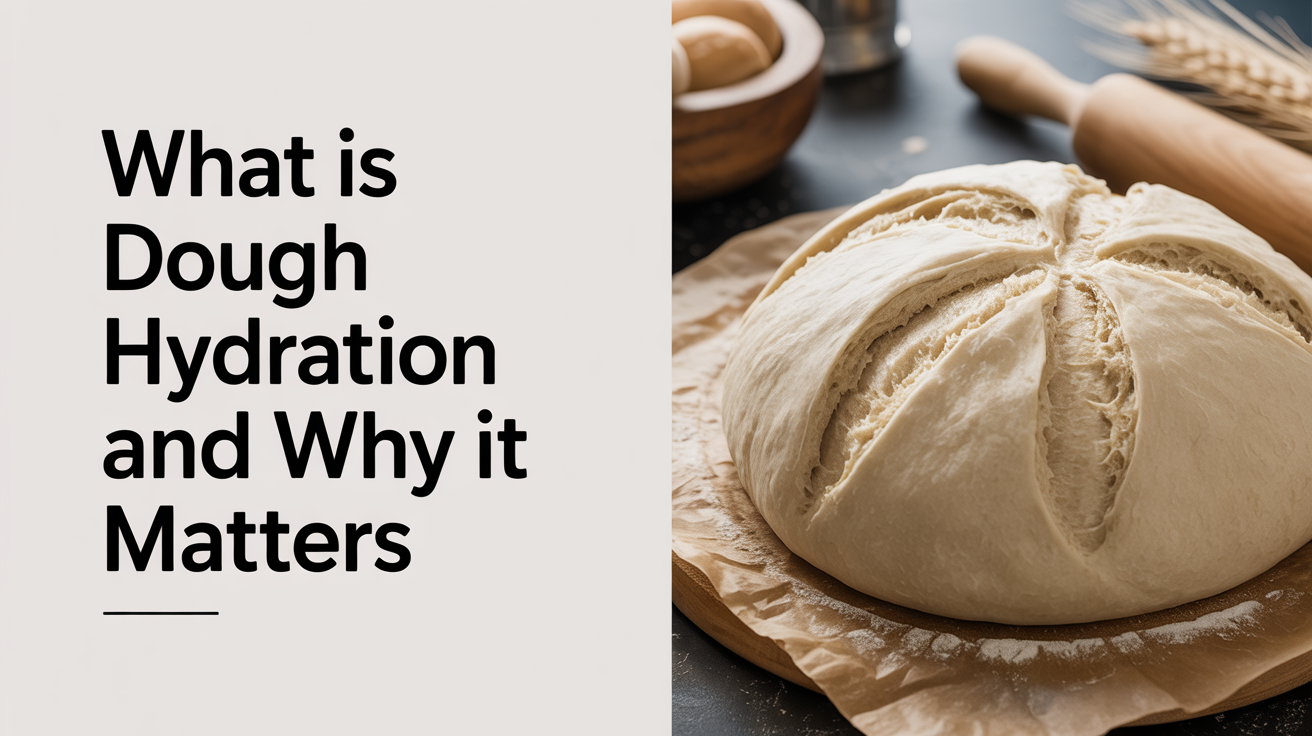
Dough hydration is simply the ratio of water weight to flour weight in a recipe, expressed as a percentage. A loaf made with 300 g of water and 500 g of flour has a hydration of 60%. That single number tells you more about how a dough will feel, handle, and bake than almost anything else in a recipe.
Once you understand hydration, bread hydration explained in any recipe starts to click. You stop wondering why one recipe produces a firm, smooth ball and another leaves your hands sticky and your bench smeared. It all comes back to water.
How to Calculate Dough Hydration
The formula is straightforward:
Hydration (%) = (water weight ÷ flour weight) × 100
So if a recipe calls for 375 g water and 500 g flour: 375 ÷ 500 = 0.75, or 75% hydration.
A few things to keep in mind:
- Use grams, not volume. Cup measurements introduce too much variation to make this calculation reliable.
- Count all flour. If a recipe uses a blend of bread flour and whole wheat, add them together before dividing.
- Count all water. That includes milk, egg whites, or liquid starters like fed sourdough. Milk is roughly 87% water, so 100 g of milk contributes about 87 g toward your water total.
This is the same percentage-based thinking used in baker's percentages, which let you read and scale any recipe without converting anything by hand. If you are not already comfortable with baker's math, that guide pairs well with this one.
What Hydration Feels Like at Different Levels
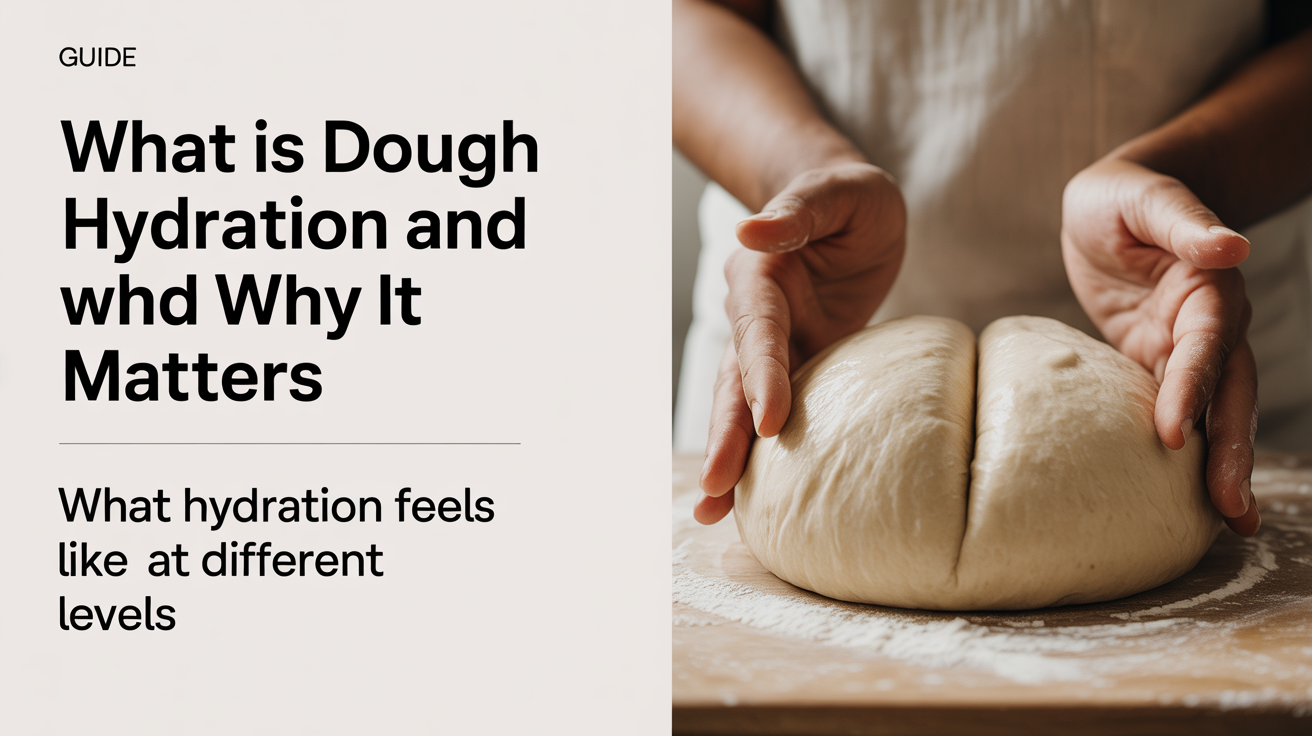
The numbers mean nothing until you feel the dough. Here is a rough map:
55–62% (low hydration): Stiff, smooth, easy to handle. Holds its shape without much help. Rolls out cleanly, barely sticks to your hands. Think bagels and most sandwich loaves.
63–69% (moderate hydration): Tacky but workable. Pulls away from the bowl cleanly, needs a little flour on the bench but not much. A good range for beginner lean bread.
70–74% (medium-high): Noticeably soft and slightly sticky when you first mix it, but it tightens up with folding and time. Standard territory for many sourdoughs and rustic country loaves.
75–80% (high hydration): Wet enough to spread if left alone. Requires techniques like stretch-and-fold rather than traditional kneading. Rewards patience with an open crumb and crisp crust.
80%+ (very high): Extremely slack and challenging. This is the ciabatta and pan de cristal range. Barely resembles what most people think of as dough. Best left until you are confident with lower hydrations.
Hydration Ranges by Bread Type
| Hydration | Bread Types | Crumb Result |
|---|---|---|
| 55–62% | Bagels, pretzels, firm rolls | Dense, tight, chewy |
| 63–67% | Sandwich loaves, milk bread | Soft, fine, even crumb |
| 68–72% | Baguettes, basic sourdough | Moderate openness, some holes |
| 73–76% | Country loaves, batard | Open crumb, irregular holes |
| 77–82% | Ciabatta, high-hydration sourdough | Very open, lacey interior |
| 83%+ | Pan de cristal | Extremely open, nearly translucent |
These are ranges, not rules. A baker with excellent shaping skills can get an open crumb from a 72% dough, and a beginner might get a tight crumb from 78% if the fermentation is off.
Why Hydration Affects Your Crumb
Water does two major things inside the dough. First, it hydrates the proteins in flour so they link up into gluten strands. Second, it becomes steam during baking, which pushes the crumb open from the inside.
Higher hydration gives the yeast more mobility, fermentation gases expand more freely, and the crumb has room to form large, irregular holes. But a wetter dough is also harder to shape and more prone to spreading sideways rather than rising upward. That is the trade-off at the heart of high hydration dough.
Lower hydration dough keeps its shape easily but produces a tighter crumb because there is less steam and the gluten network is denser and less stretchy.
Gluten development also behaves differently at different hydrations. In a stiff dough you can feel the gluten clearly when you knead: it resists, springs back, gets smooth. In a very wet dough that resistance is harder to feel by hand, which is why tools like the windowpane test help you check gluten development without relying on feel alone.
How Flour Type Changes Everything
Hydration percentages are relative to the flour you are using, and not all flours absorb water the same way.
Bread flour (higher protein, around 12–14%) absorbs more water than all-purpose flour. A 72% hydration bread flour dough will feel similar to a 68% all-purpose dough.
Whole wheat flour is even thirstier. The bran particles in whole wheat absorb water slowly and cut through gluten strands. Most bakers add 5–10% extra hydration when swapping in whole wheat, and let the dough rest (autolyse) to give the bran time to fully hydrate.
Rye flour absorbs water aggressively. A dough that is even 20% rye will feel noticeably wetter than an all-white dough at the same hydration level.
This is worth keeping in mind when you adapt recipes across flour brands or types. A recipe developed with one brand of bread flour might need a small tweak in water when you switch to another.
Tips for Handling Wetter Dough
If you are stepping up from sandwich loaves to a higher hydration sourdough, the dough will feel wrong at first. Here is what actually helps:
Use wet hands, not flour. Extra flour on the bench or your hands throws off the hydration you worked to calculate. A little water on your palms lets you handle sticky dough without adding anything.
Stretch and fold instead of kneading. Traditional kneading on the bench is frustrating with high hydration dough. Four rounds of stretch-and-fold during the bulk ferment (one every 30 minutes) builds the same gluten structure without the mess. Kneading bread dough by hand works well for firmer doughs, but wetter doughs respond better to coil folds and gentle handling.
Cold dough is easier to shape. After bulk fermentation, put the dough in the fridge for 30 minutes before shaping. Cooler dough is stiffer and less likely to spread on you.
A bench scraper is not optional. With high hydration dough, a metal bench scraper lets you move dough without tearing it. It is the single most useful tool for working at 75%+.
Start at a lower hydration and work up. If you want to bake an 80% sourdough, spend a few bakes at 70%, then 73%, then 76%. You are building muscle memory for how the dough should feel at each stage. Jumping straight to very high hydration before you have that reference point makes troubleshooting much harder.
Frequently Asked Questions
What is a good hydration for a beginner?
Start around 65–68%. The dough is tacky but manageable, teaches you what a developed gluten network feels like, and gives you a decent crumb without requiring advanced shaping techniques.
Can I adjust hydration mid-recipe?
Yes, within reason. If the dough feels too dry, you can add water a tablespoon at a time and work it in during early mixing. Going the other way (dough too wet) is harder: you can dust in a little flour, but it incorporates unevenly once gluten has formed. The better fix is to adjust the recipe before your next bake.
Why does my 70% dough feel wetter than someone else's?
Flour brand, protein content, humidity in your kitchen, and water temperature all play a role. This is normal. Two bakers using the same recipe in different kitchens can end up with noticeably different-feeling doughs. Trust how your dough feels and adjust from there, not just the numbers.
Does higher hydration always mean more open crumb?
Not automatically. Fermentation timing, shaping tension, and oven spring all contribute. You can have a wide-open crumb at 72% with good technique, or a dense loaf at 80% if the fermentation is off or the dough spreads during baking. Hydration sets the ceiling for openness; technique determines whether you reach it.
What happens if I use too much water?
The dough won't hold structure. It spreads sideways during final proof and baking instead of rising. The crust may still color, but the interior will be gummy or collapsed. If this happens, lower the hydration on your next attempt by 2–3 percentage points and see how it compares.