Technique & Science
Proofing Bread: How Temperature Changes Everything
Learn how proofing bread temperature affects your rise and flavor. Practical ranges, home warm spots, a time-vs-temp table, and how to read your dough.
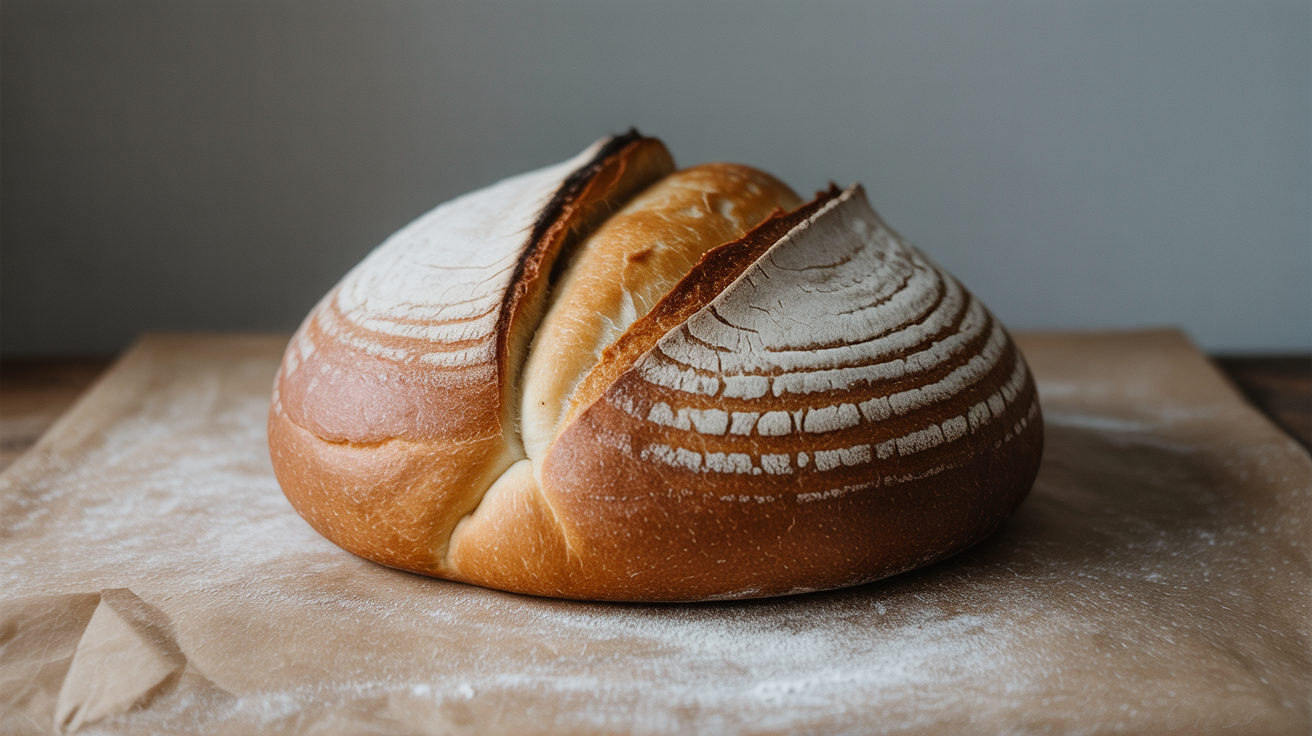
Temperature is the single biggest variable in proofing bread. Get it in the right range and fermentation runs smoothly; too warm or too cold, and timing goes sideways fast.
At a Glance
- The practical proofing sweet spot for most home baking is 75 to 82°F (24 to 28°C).
- Below 50°F (10°C) yeast activity crawls; above 140°F (60°C) it dies outright.
- Dough temperature right after mixing matters as much as room temperature, and it's the one variable you can control with your water.
- The poke test reads the dough directly and is more reliable than any clock-based rule.
- A 10°F swing in dough temperature can roughly double or halve your proofing time.
- Refrigerator retarding (38-40°F) is a legitimate slow-proof technique, not a workaround, and it builds flavor along the way.
Why Temperature Controls Fermentation
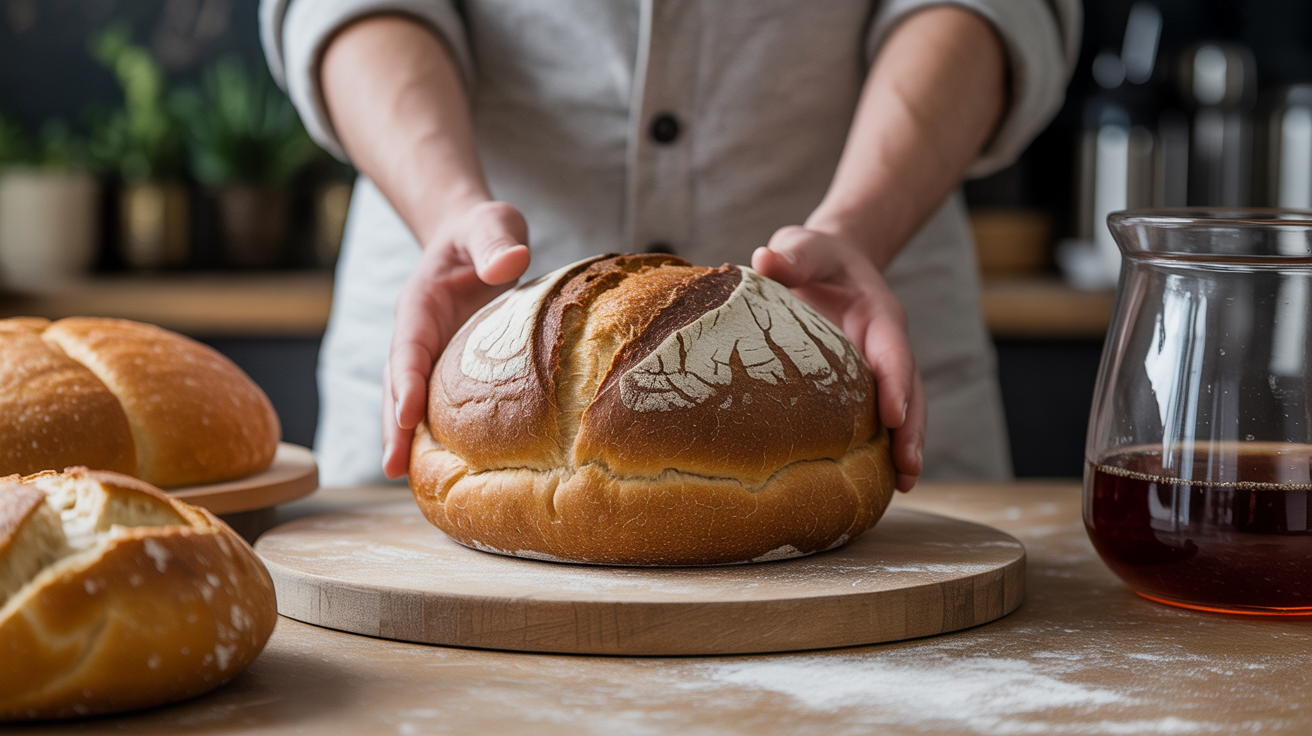
Bread rises because yeast and bacteria consume sugars in the flour and produce carbon dioxide gas. That biological activity is sensitive to heat. Warmer conditions speed the organisms up; cooler conditions slow them down.
This is not just about rise speed. Fermentation temperature also shapes flavor. Yeast works quickly at higher temperatures, but the bacteria that produce organic acids prefer a slower, cooler pace. A dough proofed at 80°F (27°C) will be ready faster than one held at 65°F (18°C), but the slower dough often tastes more developed.
What Happens at the Extremes
Below about 50°F (10°C), yeast activity slows to a crawl. Dough will still rise in a cold refrigerator, but it takes many hours or overnight. That cold fermentation technique is useful for schedule flexibility and flavor, but it is not a substitute for a normal proof when you need the dough ready in a couple of hours.
Above about 95°F (35°C), yeast activity starts to become erratic, and above 140°F (60°C) the organisms begin to die. Proofing near a heat source that gets that warm will damage your dough's ability to rise in the oven. This is the same failure mode that ruins a yeast bloom in water that's too hot: past a certain point, heat doesn't speed fermentation up, it shuts it down.
The Practical Proofing Range
For most home bakers, the sweet spot for proofing bread sits between 75°F and 82°F (24°C to 28°C). Within that window, fermentation moves at a predictable pace, usually one to two hours for a shaped final proof, and the dough builds enough structure to hold its shape during baking.
Sourdough doughs often proof at the lower end of this range, or even cooler, because a long, slow ferment gives the wild yeast and bacteria time to work together. Commercial yeast doughs are more forgiving and can handle the upper end of the range without overproofing quickly.
Finding a Warm Spot in Your Kitchen
Most home kitchens run between 68°F and 74°F (20°C and 23°C), which is a bit cool for a fast proof but perfectly workable. A few reliable warm spots:
- Inside the oven with just the light on. Many ovens hold around 75 to 80°F (24 to 27°C) with only the incandescent light running. Check with a thermometer before you rely on it.
- On top of the refrigerator. The compressor releases a small amount of heat. The actual temperature depends on your fridge model, but it often lands in the 75 to 78°F (24 to 26°C) range.
- Near (not directly above) a radiator or heat vent. Useful in winter, but keep the dough far enough away that the surface does not dry out or get blasted with dry heat.
- In a turned-off oven with a pan of just-boiled water on the rack below. The steam and residual warmth create a warm, humid environment that works well for a one to two hour proof.
None of these spots need to be exact. A range of a few degrees either side of 78°F still gives predictable results; what causes real trouble is a spot that drifts, like an oven light that cycles on and off, or a radiator that runs hotter as the evening goes on.
A slow cooker or small proofing box set to its lowest "warm" setting, with the lid propped open a crack and a thermometer inside to confirm the temperature, is another option worth trying if your kitchen runs consistently cold through the winter. The goal in every case is the same: a stable number, not necessarily a perfect one.
Dough Temperature Matters As Much As Air Temperature
Professional bakers track desired dough temperature (DDT) and adjust their water temperature to hit it. You do not have to do the full math at home, but knowing your dough temperature helps.
A simple rule: if your dough feels noticeably cold to the touch after mixing, it will proof slowly. If it feels quite warm, it will move fast. Aiming for dough that feels around 75 to 78°F (24 to 26°C) right after mixing puts you in a good starting position.
An instant-read thermometer inserted into the bulk of the dough gives you an actual number. King Arthur Baking's explanation of desired dough temperature puts the ideal range for wheat-based yeast dough at 75 to 78°F and frames water temperature as the one ingredient a home baker can adjust easily to hit that number, since flour and room temperature are largely fixed by the time you start mixing. In their side-by-side test, dough mixed to a calculated target temperature produced a noticeably better rise and crumb than dough mixed with water straight from the tap at either extreme.
If you are curious about the math behind adjusting your water temperature to hit a target, baker's percentages explained covers the calculation approach bakers use to think about dough variables systematically.
Temperature vs. Time: A Reference Table
These are approximate ranges for a standard first (bulk) proof. Actual times depend on your recipe, flour, hydration, and starter or yeast health. Use the table as a starting point, not a guarantee.
| Dough Temperature | Approximate Bulk Proof Time | Notes |
|---|---|---|
| 65°F / 18°C | 3 to 5 hours | Slow; works well for overnight retards |
| 70°F / 21°C | 2.5 to 4 hours | Cool kitchen, common in winter |
| 75°F / 24°C | 1.5 to 3 hours | Low end of ideal range |
| 78°F / 26°C | 1 to 2 hours | Middle of ideal range |
| 82°F / 28°C | 45 min to 1.5 hours | Faster; watch the dough closely |
| 86°F / 30°C | 30 to 60 minutes | On the warm end; easy to overproof |
Final proof times after shaping are usually shorter than bulk proof times. Expect roughly half the time of the bulk proof, though this varies by recipe.
Dough hydration also plays a role in how you read the proof. Wetter doughs spread more and can look flatter than they actually are; drier doughs hold their shape but may show slightly less visible volume increase.
Reading the Dough, Not the Clock
Time is a guide, not the answer. Your dough does not know what the recipe says; it responds to the actual conditions in your kitchen. Learning to read the dough directly is more reliable than watching the timer.
The Poke Test
For the final proof, the poke test gives you a quick read. Press a floured finger about half an inch (1 cm) into the shaped dough and watch what happens:
- Springs back quickly and completely (within a second or two): the dough is still underproofed. Give it more time.
- Springs back slowly, leaving a slight indent that gradually fills in over 3 to 5 seconds: this is the target. The dough is ready to bake.
- Does not spring back, leaves a permanent dent: the dough is overproofed. Bake it right away to salvage what you can, or if it is a simple loaf, try reshaping and giving it a short second proof.
Signs to Watch During Bulk Fermentation
During the bulk proof, you are looking for volume increase and texture change rather than using the poke test. Aim for a 50 to 75 percent volume increase as a rough benchmark, though some recipes call for less. More telling than volume:
- The dough feels lighter and more airy when you handle it.
- The surface looks slightly domed and has some bubbles visible.
- When you fold the dough, it holds tension and does not feel slack or sticky in a wet way.
The process of building structure through kneading or folding before the proof matters here. Dough that has been properly developed holds gas better during fermentation, so the visual cues are more readable.
Adjusting When Your Kitchen Is Too Cold or Too Hot
If your kitchen is cold (below 68°F / 20°C): Use one of the warm spots described above. You can also use slightly warmer water when mixing to raise your starting dough temperature. Adding 5°F (3°C) to your mix water can make a noticeable difference in how quickly the dough gets going.
If your kitchen is hot (above 82°F / 28°C in summer): Proof on the counter but stay close. Check earlier than your recipe suggests. For sourdough especially, a hot kitchen can push the dough past its peak before you realize it. Using cooler water at mixing helps offset the ambient heat. Ice cubes swapped in for a small portion of the recipe's water work well in a pinch; just subtract the ice's weight from the rest of the water so the hydration stays correct.
Refrigerator retard: Moving shaped dough into the refrigerator overnight is a legitimate technique. The cold slows fermentation to a near-stop, and you bake the dough cold, straight from the fridge. This is especially common with sourdough loaves, and the long cold proof often improves oven spring and scoring. King Arthur Baking's guide to refrigerating bread dough notes this typically stretches a normal 1 to 3 hour room-temperature rise into an 8 to 12 hour cold one, and recommends chilling dough during only one rise, not both, so the dough doesn't spend so long fermenting that it exhausts its structure before baking. The same idea applies to a sourdough loaf: timing windows and how to judge doneness on cold dough work the same way once the dough is shaped.
Frequently Asked Questions
What is the best temperature to proof dough at home? For most recipes, somewhere between 75°F and 82°F (24°C to 28°C) gives reliable results. At the lower end of that range, fermentation is slightly slower and more controlled. At the upper end, the dough moves faster and needs more attention. Your kitchen does not need to hit those numbers exactly; understanding the direction helps you adjust your timing.
Can I proof bread in the refrigerator? Yes. Cold proofing, also called retarding, is a real technique rather than a workaround. Shaped dough held in the refrigerator at 38 to 40°F (3 to 4°C) ferments slowly over 8 to 16 hours. The extended fermentation builds flavor and makes scheduling flexible. Many bakers proof their sourdough loaves overnight in the fridge and bake them in the morning.
Why did my bread not rise much even though I proofed it for the full time? The most common reason is that the kitchen was cooler than expected. Time is linked to temperature, so a dough proofed at 65°F (18°C) may need twice as long as the recipe assumes. Other factors include weak yeast, a starter that was not active, or dough that was too cold when mixed. Checking your dough with a thermometer after mixing helps catch temperature problems early.
How do I know when my dough is overproofed? Overproofed dough feels slack and deflates easily when touched. It may have a slightly sour or alcoholic smell from excess fermentation. When you score it before baking, it spreads sideways instead of holding its shape. In the oven, it produces little spring because the yeast has already used up most of its gas-producing capacity.
Does proofing temperature affect the flavor of the bread? It does. Warmer, faster proofs tend to produce a milder flavor. Slower, cooler proofs allow more time for organic acids to develop, which adds complexity and, in sourdough, a more noticeable tang. This is why many bakers deliberately slow down their sourdough bulk fermentation or use a cold final proof even when the schedule does not require it.
Does the type of container affect proofing temperature? Somewhat. A thick ceramic or ovenproof glass bowl retains heat more evenly than a thin metal or plastic bowl, which can lose heat quickly in a cool kitchen. If you're proofing in a cold spot, a bowl with some thermal mass, combined with a warm damp towel over the top, keeps the dough closer to its starting temperature for longer than an uncovered thin bowl on a cold counter.