Yeasted Breads
Enriched Dough Explained: Baking With Butter, Milk, and Eggs
Learn what enriched dough is, how fat, eggs, sugar, and milk change the crumb, and when to add butter for the softest results.
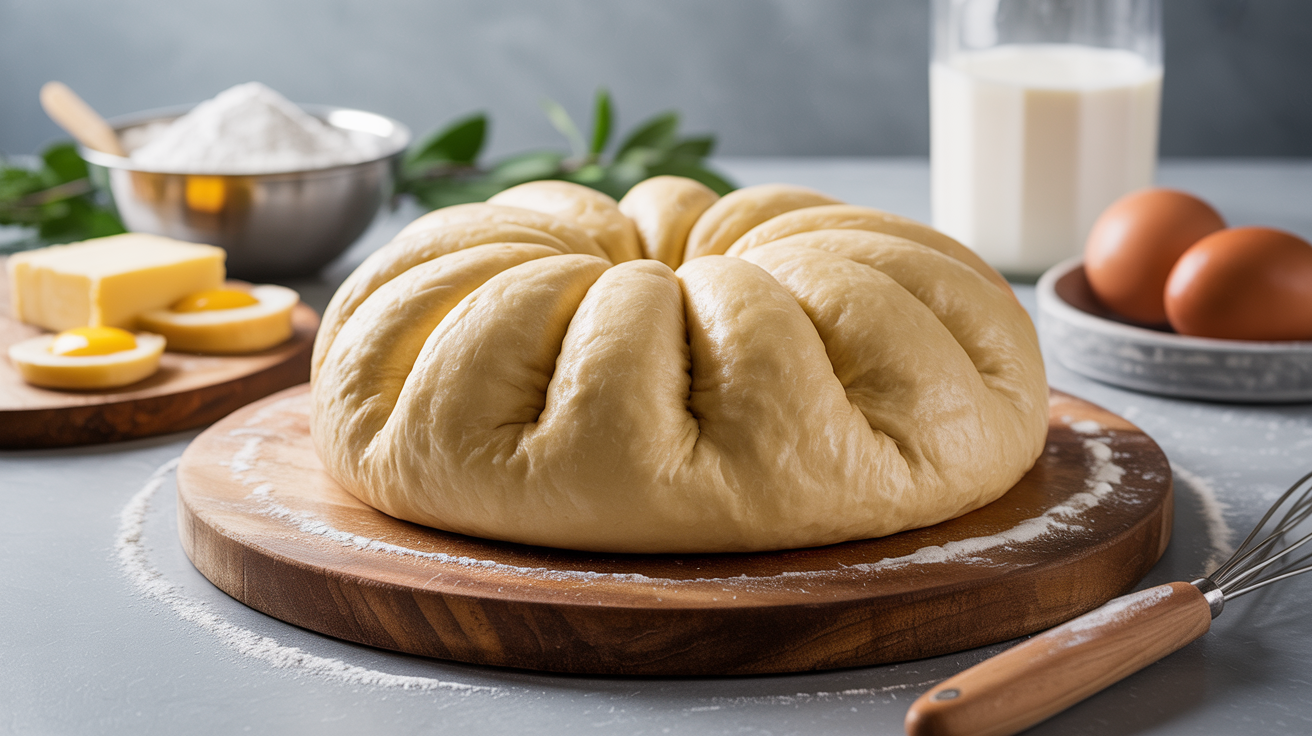
Enriched dough is any yeast dough that includes fat, eggs, sugar, or dairy in addition to the basic flour, water, salt, and yeast. Those additions are what separate a brioche from a baguette and a milk bread from a simple sandwich loaf.
What Makes a Dough "Enriched"?
In bread baking, doughs fall into two broad groups: lean and enriched.
A lean dough keeps things minimal: flour, water, salt, yeast. Baguettes, ciabatta, and most sourdough loaves are lean. The crumb is open and chewy, the crust crackles, and the flavor comes almost entirely from fermentation.
An enriched bread dough adds one or more of the following:
- Fat (butter, oil, or shortening)
- Eggs
- Sugar or honey
- Milk, cream, or buttermilk
Each ingredient does something specific to texture, flavor, and how the dough behaves. Understanding what they do helps you troubleshoot problems and adapt any enriched dough recipe with confidence.
How Each Enrichment Changes the Dough
Butter and Fat
Fat coats gluten strands and limits how tightly they bond. The result is a tender, soft crumb rather than a chewy one. It also slows staling by holding onto moisture longer than a lean loaf.
The trade-off: fat weakens gluten, so enriched doughs need longer kneading or a slower fermentation to build enough structure to hold their shape. Very high-fat doughs like brioche (which can contain 50% butter by weight of flour) are notably slack and sticky at room temperature. Chilling the dough firms the butter and makes shaping much easier.
Butter also adds flavor. Unsalted butter gives you more control over seasoning. European-style butter with higher fat content (82-84%) produces a slightly richer crumb than standard American butter (80%).
Eggs
Eggs contribute fat (from the yolk) and protein (from both yolk and white). The yolk fat tenderizes the crumb in a similar way to butter. The extra protein helps the dough trap gas and set during baking, giving you good lift and a fine, even crumb.
Eggs also add color. Yolks contain pigments that turn soft enriched bread a warm golden-yellow inside and deepen the crust color. Challah gets much of its richness from egg yolks; the classic shiny crust comes from an egg-wash applied just before baking.
Sugar and Honey
Sugar does more than add sweetness. It retains moisture (it's hygroscopic), which keeps the crumb soft for longer. It also speeds up browning: the sugars react with proteins during baking (Maillard reaction and caramelization), so enriched loaves go from pale to dark faster than lean breads.
This means you often need to lower your oven temperature slightly for enriched breads, around 325-350 F (165-175 C), so the inside bakes through before the crust burns.
Sugar also feeds yeast, but in high concentrations it competes with the yeast for water and actually slows fermentation. That is why very sweet doughs like panettone or some milk breads need an osmotolerant yeast (labeled "instant yeast for sweet doughs" or "SAF Gold") to rise reliably.
Milk and Dairy
Milk replaces some or all of the water in the dough. The proteins and sugars in milk contribute to a softer crumb and deeper browning. Milk also adds a subtle, slightly sweet flavor.
Scalding milk (heating it just below a boil, around 180 F / 82 C, then cooling it) was once recommended to deactivate an enzyme that weakens gluten. Modern pasteurization already handles this, so scalding is rarely necessary today. Some bakers still do it for certain Japanese milk bread recipes where it forms a tangzhong-style paste, but for most soft enriched bread recipes, room-temperature or slightly warmed milk works fine.
Buttermilk adds mild tang and reacts with baking soda if the recipe includes it. Cream increases fat content further. Whole milk gives better results than skim in most enriched loaves.
Typical Enrichment Percentages
These percentages are expressed as a share of total flour weight, which is how baker's percentages work. Flour always equals 100%; everything else is relative to it.
| Bread Type | Butter | Eggs | Sugar | Milk |
|---|---|---|---|---|
| Soft sandwich loaf | 5-10% | 0% | 3-6% | 50-60% |
| Dinner rolls | 10-15% | 5-10% | 5-8% | 50-60% |
| Challah | 10-15% | 25-35% | 5-10% | 0% (water) |
| Milk bread (shokupan) | 10-15% | 5-10% | 8-12% | 60-70% |
| Brioche (classic) | 40-60% | 40-60% | 8-12% | 0-10% |
These are starting points. Recipes vary, and some styles push outside these ranges.
Working With Enriched Dough
When to Add Butter
The order of addition matters for high-fat doughs. If you drop a large amount of cold butter into flour and water at the start, the fat coats the flour before gluten can form. You end up with a greasy mess that never develops proper structure.
The standard approach: mix and knead the dough until it passes the windowpane test (a small piece stretches thin without tearing), then add softened butter a tablespoon at a time. Each piece should be fully absorbed before the next goes in. This takes patience, usually 10-20 minutes of additional kneading by hand or 8-12 minutes in a stand mixer.
For lower-fat doughs (under 15% butter), you can often add softened butter partway through the initial mix without major issues. It is the very high-fat doughs like brioche where the stepwise addition really earns its place.
Kneading and Gluten Development
Enriched doughs need thorough gluten development because the enrichments work against structure. Plan on longer knead times than you would give a lean dough. The dough will feel tacky but should eventually clear the sides of the bowl and pass the windowpane test.
Resist adding too much extra flour when the dough feels sticky. Enriched doughs are meant to be softer than lean doughs. Extra flour makes the final loaf dense and dry.
A stand mixer with a dough hook makes high-butter enriched doughs much easier to handle. By hand, use a bench scraper and the slap-and-fold technique rather than the standard push-turn method.
Rise Times and Temperature
Fat, sugar, and eggs all slow yeast activity to some degree. Expect longer rise times than a lean dough made with the same flour and yeast quantity. First rises often take 1.5 to 2 hours at room temperature. Shaping and a second rise add another hour to ninety minutes.
A slow overnight cold ferment in the refrigerator is common for enriched doughs and improves flavor noticeably. It also makes high-butter doughs easier to handle, since the cold firms the fat.
For easy homemade dinner rolls, the enriched dough method is the same but the individual rolls rise faster than a full loaf because of the smaller mass.
Classic Enriched Bread Examples
These breads appear repeatedly in recipes because they show how adjusting enrichment levels produces very different results from the same basic method.
Brioche sits at the far end of the spectrum: up to 60% butter and 60% eggs by flour weight. The crumb is featherlight and almost cake-like. Shaping is done cold to prevent the butter from melting out.
Challah skips dairy entirely and relies on eggs and oil for richness. The braided shape and egg wash give it its recognizable glossy, deep-brown crust.
Milk bread (shokupan) uses high milk content and often a tangzhong (a cooked flour-and-water or flour-and-milk paste) to achieve an exceptionally soft, fluffy crumb that stays tender for days. If you want to learn that method, the process is similar to how to make soft sandwich bread at home.
Dinner rolls use moderate enrichment, typically butter, milk, and a small amount of egg and sugar. They are a good first project because the shaping is simple and the dough is forgiving.
If you want to practice the method before committing to a loaf, focaccia uses olive oil as a light enrichment and is one of the most beginner-friendly enriched bakes around.
Frequently Asked Questions
Can I use oil instead of butter in an enriched dough? Yes. Oil produces a tender crumb but lacks the flavor and structure that solid butter provides. Challah traditionally uses oil. For breads where buttery flavor is the point (brioche, milk bread), oil is not a direct substitute. Use a neutral oil like grapeseed or light olive oil if the recipe calls for it.
Why is my enriched dough not rising? The most common cause is that the yeast was killed by liquid that was too hot. Milk or water above 110 F (43 C) can damage yeast. Check that your liquid is warm but not hot before mixing. High sugar content can also slow the rise significantly; give the dough more time rather than more yeast.
Do I need to scald the milk? For most home enriched dough recipes, no. Scalding was important before widespread pasteurization. Today, warming the milk to around 95-105 F (35-40 C) to activate the yeast is all that is needed. Some Japanese milk bread recipes do use a tangzhong cooked paste, which is a different technique for improving softness, not the same as scalding.
Can I refrigerate enriched dough overnight? Yes, and for high-butter doughs it is often recommended. Shape the dough before refrigerating, cover tightly, and let it proof in the fridge for 8-12 hours. Take it out, let it come to room temperature for about an hour (longer for large loaves), and bake when it looks visibly puffed.
How do I know when an enriched dough is fully baked? Because enriched breads brown fast from the sugar, the color alone is not a reliable guide. Use an instant-read thermometer. Most enriched loaves are done at an internal temperature of 190-200 F (88-93 C). Rolls are at the lower end; denser loaves like brioche need to hit 200 F (93 C) to avoid a gummy center.