Yeasted Breads
How to Make Soft Sandwich Bread at Home
Learn how to bake a tender, pillowy homemade sandwich bread loaf from scratch, with tips on enriched dough, shaping, proofing, and baking.
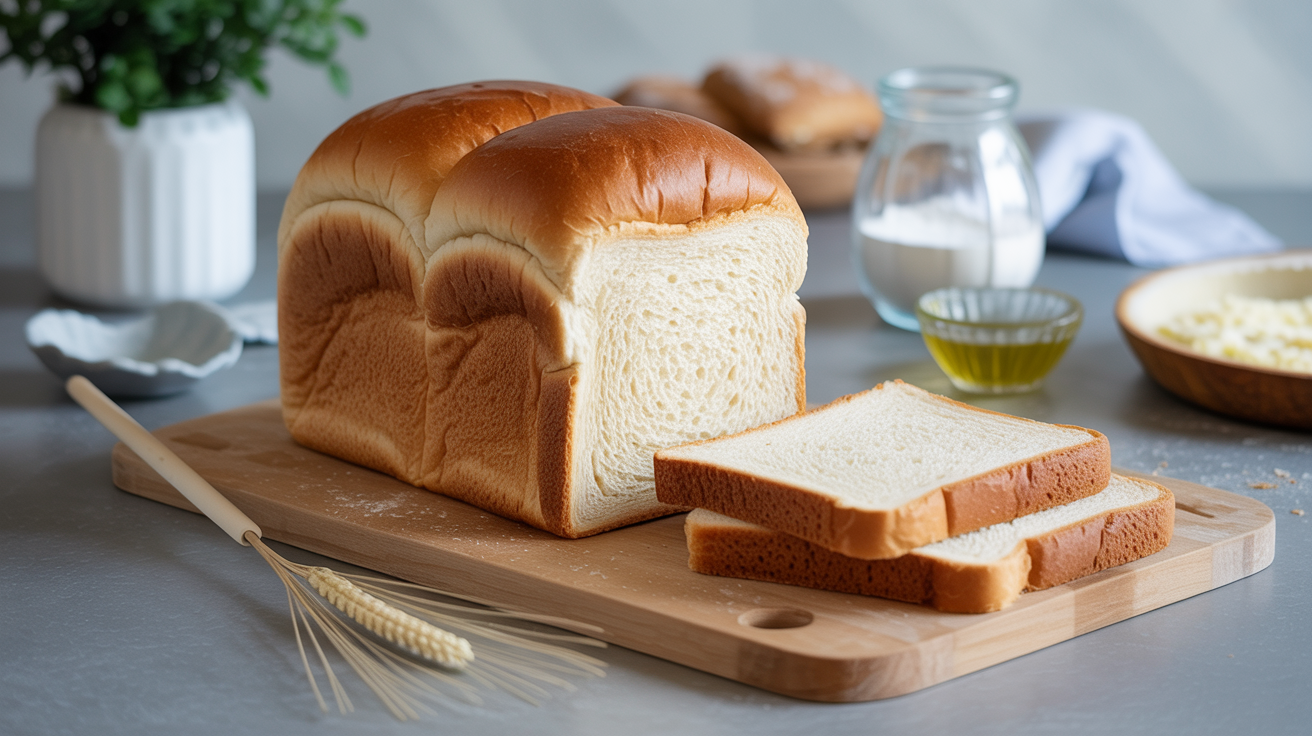
There is a reason homemade sandwich bread never lasts more than a day in most households. It comes out of the oven with a paper-thin crust, a pillowy crumb, and a smell that makes everyone drift into the kitchen. And once you've had a grilled cheese or a turkey sandwich on a slice you baked yourself, the store-bought stuff is a hard sell.
This guide walks you through a foolproof sandwich bread recipe, from mixing the dough to pulling a golden loaf out of the oven. You'll also learn why certain ingredients create that characteristic soft white sandwich bread texture, and how to know with confidence when the loaf is done.
What Makes Sandwich Bread Soft
Standard rustic breads like baguettes or sourdough boules are lean doughs: flour, water, salt, yeast. They're chewy and crusty because of it. A sandwich bread recipe takes a different approach. It uses what bakers call an enriched dough, one that includes fat, dairy, and a small amount of sugar.
Here's what each addition does:
Milk replaces some or all of the water. The fat and proteins in milk tenderize the gluten strands, giving the crumb a finer, softer texture. It also contributes a subtle richness. Whole milk works best, but 2% is fine.
Butter coats the gluten network and keeps the crumb from becoming too tight. It also slows staling, so the loaf stays soft for several days. Use unsalted butter so you control the salt level.
Sugar feeds the yeast during the rise and helps the crust brown evenly in the oven. A tablespoon or two is all you need. More than that and you're heading toward brioche territory.
Egg (optional) adds structure and a slightly richer crumb. This recipe includes one egg, which gives the bread a little lift and a golden interior. You can leave it out if you prefer a plainer loaf, just add a tablespoon of extra milk to compensate.
Together, these ingredients produce a dough that's softer, slightly tacky, and more forgiving than lean bread doughs. If you've made easy homemade dinner rolls, you'll recognize the feel immediately. Sandwich bread is essentially that same enriched dough pressed into a loaf pan instead of shaped into balls.
Ingredients
This recipe makes one standard 9x5 inch (23x13 cm) loaf.
| Ingredient | Grams | Cups / Volume |
|---|---|---|
| Bread flour | 380 g | 3 cups |
| Whole milk, warm (38-40°C / 100-105°F) | 240 g | 1 cup |
| Unsalted butter, softened | 42 g | 3 tablespoons |
| Granulated sugar | 14 g | 1 tablespoon |
| Fine salt | 8 g | 1.5 teaspoons |
| Instant yeast | 7 g | 2.25 teaspoons (1 packet) |
| Large egg | 1 | 1 |
A note on flour: bread flour has a higher protein content than all-purpose flour, which builds more gluten and gives the loaf better structure and height. All-purpose flour works, but the crumb will be slightly less chewy and the loaf may not rise quite as tall.
How to Make Homemade Sandwich Bread
Step 1: Activate the Yeast (5 minutes)
Warm the milk to between 38-40°C (100-105°F). You want it comfortably warm on your wrist, not hot. Stir in the sugar and instant yeast. Let it sit for 5 to 10 minutes. If the mixture turns foamy and smells yeasty, you're good to go. If nothing happens, the yeast may be old or the milk was too hot. Start over with a fresh packet.
Step 2: Mix the Dough (10 minutes)
Crack the egg into a large bowl and beat it lightly. Pour in the yeast mixture and stir to combine. Add the flour and salt, then mix until a shaggy dough forms. Turn it out onto a clean surface and knead for 6 to 8 minutes by hand, or 5 minutes on medium speed with a stand mixer and dough hook.
The dough is ready when it's smooth, slightly tacky (not sticky), and springs back slowly when you poke it. If it's sticking to your hands and the counter continuously, add flour one tablespoon at a time. If it's stiff and tearing rather than stretching, it's too dry. Wet your hands lightly and keep kneading.
Step 3: Add the Butter (5 minutes)
With the dough on your work surface (or still in the mixer), add the softened butter a tablespoon at a time. The dough will seem like a greasy mess for the first minute or two. Keep going. Knead or mix until the butter is fully absorbed and the dough is smooth and elastic, about 5 more minutes by hand or 3 minutes in the mixer.
Step 4: First Rise
Shape the dough into a ball and place it in a lightly oiled bowl. Cover with plastic wrap or a damp kitchen towel. Let it rise at room temperature (around 21-24°C / 70-75°F) until doubled in size, about 1 to 1.5 hours. If your kitchen is cool, it may take closer to 2 hours. That's fine. Don't rush it.
Step 5: Shape the Loaf
Lightly grease a 9x5 inch loaf pan with butter or neutral oil. Turn the risen dough out onto a lightly floured surface and gently press it flat into a rough rectangle, about the width of your loaf pan. Pat out any large bubbles.
Now roll the rectangle up tightly from one short end, like a jelly roll. Pinch the seam closed along the bottom edge. Place the log seam-side down into the prepared pan. The dough should fill the pan about halfway. Tuck the ends under slightly if they're poking out.
A tight, even roll is what gives the bread its characteristic tall, even rise. Loose shaping leads to big air pockets and a lopsided top. The same care with shaping applies when you make a homemade bread loaf for focaccia, though there the dough goes into a pan without rolling.
Step 6: Second Rise (Proof in the Pan)
Cover the pan loosely with oiled plastic wrap and let the dough proof at room temperature for 45 minutes to 1 hour. You're watching for two signs:
- The dough has risen about 1 inch above the rim of the pan. A loaf that hasn't risen enough will be dense. One that has gone too far will collapse or develop a large crack along the top.
- When you gently press the dough with a floured finger, the indent springs back slowly and about halfway. If it springs back immediately, it needs more time. If the indent stays put and doesn't spring back at all, it may be slightly over-proofed. Bake it right away.
Step 7: Bake
Preheat your oven to 190°C (375°F) while the dough finishes proofing. Once the loaf is ready, bake on the center rack for 28 to 32 minutes.
The loaf is done when:
- The crust is deep golden brown on top and along the sides (tip the pan and check)
- An instant-read thermometer inserted into the center reads 88-93°C (190-200°F)
- It sounds hollow when you tap the bottom
Pull the loaf out of the pan and cool on a wire rack for at least 45 minutes before slicing. Cutting into hot bread compresses the crumb and makes it gummy. I know it's hard to wait. Set a timer.
Tips for a Tall, Even Rise
A few things that make a real difference:
Use the right pan size. A 9x5 inch pan is standard for this amount of dough. A smaller pan gives you a taller, more domed loaf. A larger one spreads the dough out and you get a shorter, flatter loaf.
Don't add too much flour. A soft, slightly tacky dough rises better and produces a softer crumb. If you add flour until the dough stops sticking to everything, you'll get a stiff loaf.
Proof in a warm spot. If your kitchen is cold, place the covered pan in the oven with just the oven light on (not the heat). That small amount of warmth is usually enough to create an ideal proofing environment.
Score or don't. Scoring (cutting a shallow slash along the top with a sharp knife or lame) before baking allows the loaf to expand in a controlled way. For sandwich bread, it's optional. If you skip it, the bread will naturally crack along one side as it springs up in the oven, which is fine.
How to Store Homemade Bread
A homemade sandwich bread loaf has no preservatives, so it goes stale faster than commercial bread. Here's how to keep it fresh:
- Store at room temperature in a bread bag, beeswax wrap, or airtight container for up to 3 days.
- After that, slice the remainder and freeze it. Toast slices straight from frozen.
- Avoid the refrigerator. Cold air accelerates staling faster than room temperature does.
If you bake homemade pizza dough, you already know the freezer trick. It applies equally well to sandwich bread.
Frequently Asked Questions
Can I use active dry yeast instead of instant yeast?
Yes. Use the same amount (7 g / 2.25 teaspoons). With active dry yeast, proof it in the warm milk and sugar for 10 minutes and confirm it's foamy before proceeding. Instant yeast can be added directly to the flour without proofing, but active dry yeast is less reliable if you skip this step.
Why didn't my loaf rise enough?
A few common causes: yeast that's too old (check the expiration date), milk that was too hot and killed the yeast (above 49°C / 120°F), a cold kitchen that made both rises too slow, or a loaf that was under-proofed before baking. Check your yeast first by proofing it in warm liquid with a little sugar. If it doesn't foam within 10 minutes, replace it.
Can I make this bread without a stand mixer?
Absolutely. Kneading by hand works perfectly well. It takes about 10 to 12 minutes total (before and after adding the butter) and gives you a better feel for the dough. The dough is ready when it's smooth, stretchy, and passes the windowpane test: pull a small piece and stretch it gently. If it forms a thin, translucent membrane without tearing, the gluten is developed enough.
How do I know if the bread is fully baked inside?
An instant-read thermometer is the most reliable method. Insert it into the center of the loaf (through the end, not the top) and look for 88-93°C (190-200°F). Color alone isn't enough because ovens vary, and a pale loaf isn't always underbaked. If you don't have a thermometer, the hollow-tap test works: remove the loaf from the pan and tap the bottom firmly. A hollow sound means it's done. A dull thud means it needs 5 more minutes.
Can I add mix-ins like seeds or herbs?
Yes. Fold them in at the end of the kneading stage, just before the first rise. Sesame seeds, poppy seeds, dried rosemary, or shredded cheese all work. Stick to about 60 g (1/2 cup) total so you don't weigh down the dough too much. For a seeded top, brush the shaped loaf with a little milk or egg wash and sprinkle seeds on before baking.