Getting Started
How Long Does It Take to Make Bread, Start to Finish?
From mixing bowl to sliced loaf: a plain-spoken breakdown of every stage in the bread making timeline, for both yeasted and sourdough breads.
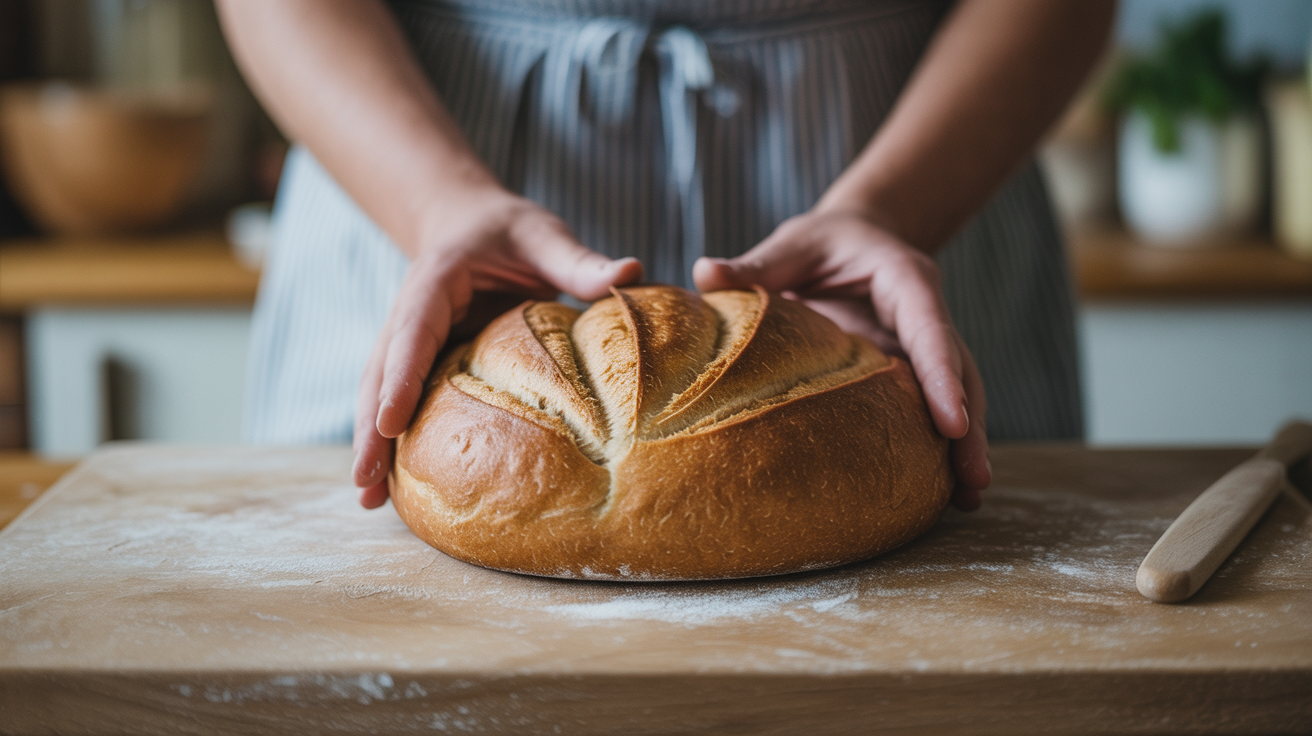
A simple yeasted loaf takes about 3 to 4 hours from the moment you scoop your flour to the moment you can actually slice it; sourdough takes anywhere from 12 to 24 hours, most of which is hands-off waiting.
That gap surprises a lot of first-time bakers. The difference is not complexity but pace. Both breads move through the same stages. Yeasted doughs use commercial yeast to sprint through those stages; sourdough uses a live starter to walk through them slowly, building flavor along the way.
The Bread Making Timeline at a Glance
Here are typical time ranges for each stage. Exact timing depends on your kitchen temperature, your flour, and the recipe you are following. Treat these as starting points, not strict targets.
| Stage | Yeasted Bread | Sourdough |
|---|---|---|
| Mixing & initial rest | 10-20 min | 20-30 min |
| Bulk fermentation (first rise) | 1-2 hours | 4-12 hours |
| Shaping | 10-15 min | 10-15 min |
| Final proof (second rise) | 45-90 min | 1-4 hours (or overnight cold) |
| Baking | 25-45 min | 35-50 min |
| Cooling (mandatory) | 30-60 min | 1-2 hours |
| Total active + passive | ~3-4 hours | ~12-24+ hours |
Notice how much of that time you are not doing anything. Bread baking has a short list of actual tasks separated by long, lazy pauses. That changes how you plan your day.
Yeasted Bread Stage by Stage
Mixing (10-20 minutes)
Combine flour, water, yeast, and salt. A standard beginner loaf might use 500 g (about 4 cups) bread flour, 350 g (1 1/2 cups) warm water, 7 g (2 1/4 tsp) instant yeast, and 9 g (1 1/2 tsp) salt. Mix until no dry flour remains, then knead by hand for 8 to 10 minutes (or 5 to 6 minutes on medium speed in a stand mixer).
The four ingredients in real bread and what each one does explains exactly how each component functions.
Bulk Fermentation (1-2 hours)
This is the first rise. Cover the dough and let it sit at room temperature (around 21-24°C / 70-75°F) until it roughly doubles in size. At 22°C, a typical yeasted dough doubles in about 60 to 90 minutes. At 18°C, it may take closer to 2 hours. You are watching for volume and feel, not a clock.
Shaping (10-15 minutes)
Punch down the risen dough to release gas, then form it into your desired shape. A simple round boule or a sandwich loaf both take only a few minutes once you have done it a couple of times. The goal is a taut, smooth surface with surface tension that holds the loaf's shape during the final proof.
Final Proof (45-90 minutes)
The shaped loaf goes into a greased pan or proofing basket for a second, shorter rise. This is typically 45 to 90 minutes at room temperature. The loaf will puff noticeably but should not over-expand before it goes into the oven. A simple poke test tells you when it is ready: press a floured finger 1 cm into the dough. If the indent springs back slowly, it is ready. If it springs back instantly, give it more time.
Baking (25-45 minutes)
Preheat your oven to 220-230°C (425-450°F) before the final proof ends. Sandwich loaves bake uncovered in a pan for 25 to 35 minutes. Free-form loaves bake at higher heat and benefit from steam in the first 15 minutes, which you can create by placing a pan of boiling water on the rack below.
Cooling (30-60 minutes)
This step is not optional, even though it is tempting to skip it. A loaf fresh from the oven is still cooking inside. The starches are setting and the crumb structure is firming up. If you cut into a hot loaf, the inside can be gummy and seem underdone even if the crust is perfect. For sandwich bread, 30 minutes is the minimum. For denser, heavier loaves, aim for 60 minutes.
Sourdough Stage by Stage
Sourdough moves through exactly the same stages as a yeasted loaf, but fermentation time is measured in hours rather than minutes. This is because wild yeast works more slowly than commercial yeast, and the acidic environment created by the lactobacillus bacteria in the starter slows things down further.
Mixing and Autolyse (20-30 minutes)
Many sourdough recipes start with an autolyse: mix flour and water together (no starter, no salt) and let them rest for 20 to 30 minutes. The flour hydrates and gluten begins forming on its own. Then add your mature starter (typically 100-200 g, about 3/4 to 1 cup) and the salt, and mix again.
Bulk Fermentation (4-12 hours)
This is the biggest time variable in sourdough. At 24-25°C (75-77°F), a well-fed starter can complete bulk fermentation in 4 to 5 hours. At 20°C (68°F), that same dough might need 8 to 10 hours. Most bakers do stretch-and-fold sets during the first 2 hours, then leave the dough alone. Look for a 50 to 75 percent volume increase and a dough that feels airy and slightly domed.
Shaping and Final Proof (1-4 hours, or overnight)
After shaping, sourdough can proof at room temperature for 1 to 4 hours, or go into the refrigerator (around 4°C / 40°F) for 8 to 16 hours. The cold retard slows fermentation almost to a stop, so you can shape in the evening and bake in the morning.
Baking (35-50 minutes)
Most sourdough recipes bake in a Dutch oven or covered pot. The first 20 minutes at 230-250°C (450-480°F) with the lid on traps steam for crust development. The lid comes off for the final 15 to 25 minutes to brown and crisp the crust.
How to bake your first loaf of bread: a complete beginner's guide walks through the full bake process step by step if you want more detail on reading your dough before it goes into the oven.
Cooling (1-2 hours)
Sourdough needs longer to cool than a sandwich loaf. A Dutch-oven boule should rest at least 1 hour, and 2 hours is better. The open crumb structure is more delicate than yeasted bread; cutting too early collapses the air pockets and leaves a gummy interior.
What Stretches or Shrinks the Timeline
Temperature
Temperature has more influence on bread rising time than any other variable. A 5°C (9°F) increase roughly doubles the speed of fermentation. If your kitchen is cold in winter, your bulk fermentation could take twice as long as the recipe suggests. A proofing drawer, a turned-off oven with just the light on (which sits around 27-30°C), or a bowl of warm water placed near the dough can all help.
Starter strength (sourdough only)
A newly-built or underfed starter ferments slowly and unpredictably. A starter that reliably doubles within 4 to 6 hours of feeding is ready to use. If yours is sluggish, expect a longer bulk fermentation.
Flour type
Whole wheat and rye flours ferment faster than white bread flour because they carry more nutrients for yeast and bacteria. A loaf with 30 percent whole wheat moves through bulk fermentation noticeably faster than the same recipe made with all white flour.
How to Fit Baking Into a Real Day
The easiest entry point is a no-knead loaf, which requires about 15 minutes of actual work spread over 12 to 18 hours. You mix in the evening, let it rise overnight, shape and bake the next morning. No-knead bread: the easiest loaf to start with covers exactly this approach with no special skills required.
For yeasted sandwich bread, a 9 a.m. start on Saturday morning means fresh bread by 1 p.m.: mix and knead by 9:20, bulk rise until 11:00, shape and proof until 12:15, bake until 12:50, cool until 1:30.
For sourdough, the cold overnight proof is your best tool for fitting baking around a normal schedule. Shape after dinner, refrigerate overnight, bake the next morning straight from the fridge.
Frequently Asked Questions
Can I speed up bread rising time?
You can raise the temperature slightly. Putting covered dough in a warm spot (27-30°C / 80-86°F) shortens the rise noticeably. Do not go above 35°C (95°F), because heat that high starts to kill yeast before fermentation is complete. Avoid adding extra yeast to speed things up; it works briefly but tends to produce off-flavors and a dense, gummy crumb.
What happens if I let the dough rise too long?
Over-fermented dough loses its structure. The gluten breaks down, the dough becomes slack and sticky, and the baked loaf comes out flat and dense with an off flavor. If your dough has clearly over-proofed, try deflating it gently, reshaping, and baking immediately. Results are rarely perfect but the loaf is usually still edible.
Why do I have to wait so long to cut sourdough?
A loaf pulled from a 230°C oven is still 95-98°C (203-208°F) at the center. The starches gelatinized during baking are still setting as the loaf cools. Slice too early and the steam inside collapses the crumb into a gummy, wet band in the middle.
Does bread making time include resting the starter?
No. The timeline clock starts after your starter has already been fed and is at peak activity. Feeding a starter and waiting for it to peak (typically 4 to 8 hours) happens before the bread making timeline begins.
What is the fastest bread you can make from scratch?
A simple flatbread or soda bread skips fermentation entirely and can go from bowl to table in under 45 minutes. These are real bread and a good way to practice mixing and shaping before you add the patience a risen loaf requires.