Sourdough
How to Feed and Maintain a Sourdough Starter
Learn how to feed sourdough starter correctly, set a feeding schedule, and keep your starter active whether it lives on the counter or in the fridge.
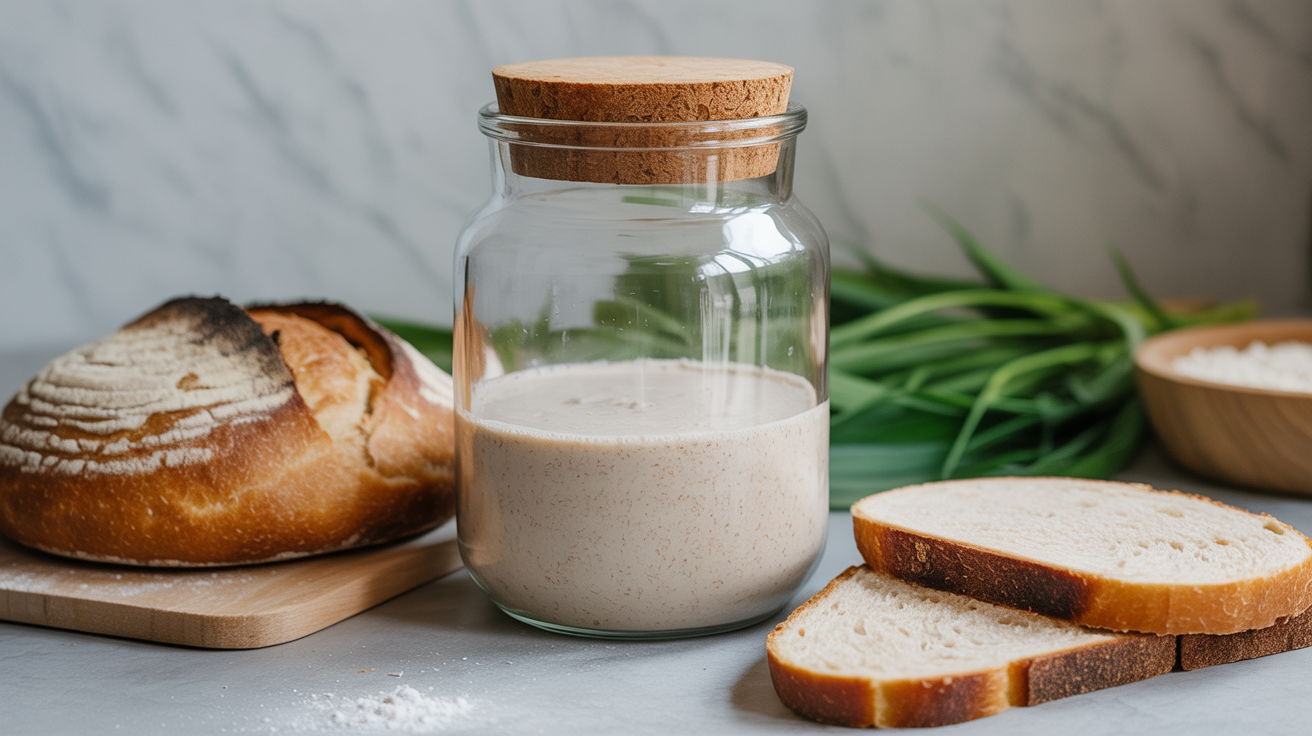
Your sourdough starter is a living culture of wild yeast and bacteria, and feeding it is the one thing you need to get right. Get it right and the starter becomes a reliable tool that produces consistent, flavorful bread. Get it wrong and you end up with a sluggish jar that never quite rises the way it should.
This guide covers the full picture: what a feeding actually does, the two main schedules (counter and fridge), ratios, how to read your starter's signals, and how to bring it back to life before you bake.
At a Glance
- Feeding does two things at once: it dilutes built-up acid and gives the culture fresh starch to eat, which is what drives the bubbling and rise.
- Counter starters need feeding every 12 to 24 hours (more often above 78°F); fridge starters can go 5 to 7 days between feedings.
- The ratio format is always starter:flour:water by weight. 1:1:1 is the standard daily maintenance feeding; higher ratios like 1:5:5 slow things down and suit a fridge schedule.
- A ripe starter has doubled, looks domed and bubbly, smells pleasantly sour, and floats in water. That is your baking window.
- Pull a fridge starter out the night before you bake, feed it, and let it peak (usually 6 to 10 hours) before mixing your dough.
- A sharp acetone smell means "overdue," not "dead." A pink or orange tinge or a foul, rotting smell means contamination, and you should start over.
What Happens When You Feed a Sourdough Starter
Every feeding does two things at once: it dilutes the acids that have built up since the last feeding, and it gives the microorganisms fresh food (the starches in flour) to metabolize. The yeast consume those starches and produce carbon dioxide, which is what makes your starter bubble and rise. The bacteria produce lactic and acetic acids, which give sourdough its flavor.
The discard step happens before feeding, not after. You remove most of the old starter (usually keeping 20 to 50 grams) so you're not accumulating a gallon of culture in your fridge. The portion you keep seeds the next generation. Then you add fresh flour and water, stir well, and wait.
Temperature drives the speed of this cycle. At around 75°F (24°C), a healthy starter fed at a 1:1:1 ratio (starter:flour:water by weight) will peak in roughly 4 to 8 hours. At 65°F (18°C), the same feeding might take 10 to 14 hours. Knowing your kitchen temperature makes the rest predictable. For a practical anchor: near a warm stovetop or on top of the fridge often runs 3 to 5 degrees warmer than the rest of the kitchen, which is enough to shave a couple of hours off a sluggish peak.
King Arthur's sourdough baking guide frames maintenance the same way: dilute the acid, feed the culture, let it peak, use it or store it. Their dedicated maintenance guide is worth bookmarking alongside this one, since it walks through the same 1:1:1 feeding by weight for counter starters and a once-weekly feeding for fridge starters that this article uses as its baseline.
Counter Schedule vs. Fridge Schedule
How often to feed sourdough depends entirely on where you're storing it.
Counter storage means your starter lives at room temperature, which means it burns through its food supply quickly. You'll need to feed it at least once every 24 hours, and twice a day in a warm kitchen (above 78°F). This schedule makes sense if you bake several times a week and want a starter that's always at or near peak activity.
Fridge storage slows the culture down dramatically. Cold temperatures suppress yeast and bacterial activity, so the starter can go 5 to 7 days between feedings without damage. Most home bakers keep their starter in the fridge and pull it out the day before baking. Feed it, let it peak, then use it.
If you're just getting started and still figuring out your rhythm, the fridge schedule is more forgiving. Missing a counter feeding by a few hours in a warm kitchen can push your starter into an overly acidic state, while a fridge starter has much more buffer.
The Feeding Schedule at a Glance
| Storage | Feeding Frequency | Typical Ratio | Starter Peaks In |
|---|---|---|---|
| Counter (~70°F/21°C) | Every 12 to 24 hours | 1:1:1 | 4 to 8 hours |
| Counter (warm, 78°F+) | Every 8 to 12 hours | 1:2:2 | 3 to 5 hours |
| Fridge (38°F/3°C) | Every 5 to 7 days | 1:5:5 | 6 to 12 hrs after returning to room temp |
Feeding Ratios and Amounts Explained
The ratio format is always starter:flour:water. A 1:1:1 feeding means equal parts of each by weight, which is a good default for daily counter maintenance. A 1:5:5 feeding gives the starter much more food relative to how much culture you're carrying, which slows things down, reduces acidity, and works well before refrigerating.
Here's how those ratios translate into practical amounts:
| Ratio | Starter | Flour | Water | Total | Flour (cups approx.) | Water (cups approx.) |
|---|---|---|---|---|---|---|
| 1:1:1 (daily counter) | 20 g | 20 g | 20 g | 60 g | 2.5 tbsp | 1.5 tbsp |
| 1:2:2 (warm kitchen) | 20 g | 40 g | 40 g | 100 g | 5 tbsp | 3 tbsp |
| 1:5:5 (fridge-ready) | 20 g | 100 g | 100 g | 220 g | ¾ cup | 7 tbsp |
| 1:10:10 (long weekend) | 10 g | 100 g | 100 g | 210 g | ¾ cup | 7 tbsp |
Weighing is always more accurate than measuring by volume, because flour compresses differently depending on how packed it is. A kitchen scale is the one tool worth owning if you bake sourdough regularly, and it matters more here than almost anywhere else in bread baking, since a starter fed inconsistently over several cycles drifts noticeably in hydration and behavior even if each individual feeding looks close enough by eye.
For flour type: unbleached all-purpose or bread flour works well for routine feedings. Adding a small amount of whole wheat or rye flour (even just 5 to 10% of the flour portion) speeds up activity because whole-grain flours contain more wild yeast food. If you're building a new starter from scratch, you can read more in our guide on how to make a sourdough starter from scratch.
How to Tell If Your Starter Is Hungry, Ripe, or Overripe
Reading your starter's state is a practical skill that takes a few weeks to develop, but there are clear markers.
Hungry (underfed): The starter has peaked and then collapsed. There's a faint or strong acetone/alcohol smell. A dried "high water line" on the inside of the jar shows where it peaked hours ago. The texture may be slightly stringy or watery. This is still a healthy starter, just past its window.
Ripe (at peak): The starter has doubled (or more) in volume since feeding. It's domed or just starting to flatten at the top. Bubbles are visible throughout, including on the sides of the jar. It smells pleasantly sour and yeasty, a bit like beer or yogurt. When you drop a small spoonful into a glass of water, it floats. This is the moment to use it for baking.
Overripe: The dome has collapsed back down, the texture is thin and runny, and the smell is sharply acidic. It will still survive, but baking with it now means a more sour loaf and possibly weaker rise. Feed it again and give it another cycle.
A common reason starters never seem to hit a clear peak is that something else is off. Check our troubleshooting guide on why your sourdough starter isn't rising and how to fix it if your culture has been sluggish for more than a few days.
As a worked example: a starter fed at 8 a.m. in a 74°F kitchen at a 1:1:1 ratio will typically show visible bubbling by 10 a.m., reach about half its peak height by noon, hit full peak somewhere around 1 to 3 p.m., and start deflating by 5 or 6 p.m. if not used or refed. Tracking that timeline for your own kitchen over a week or two, even with rough notes on a piece of tape stuck to the jar, does more for your baking consistency than any general rule in this article, because your flour, your water, and your kitchen's actual temperature swing (not just its average) all shift the numbers slightly.
Taking Your Starter Out of the Fridge Before Baking
This step trips up a lot of people. You can't pull your starter straight from the fridge and dump it into a dough. Cold starter is sluggish, and it will make your dough ferment slowly and unevenly.
The standard approach: remove your starter from the fridge the evening before you plan to bake. Let it sit at room temperature for 30 to 60 minutes to take the chill off. Then feed it (a 1:2:2 ratio works well here). Let it peak, which usually takes 6 to 10 hours at room temperature. Use it the next morning when it's domed and active.
If you want to bake the same day and forgot to take your starter out the night before, you can do two back-to-back feedings: one in the morning (1:1:1) and a second feeding 4 to 5 hours later (1:1:1 again). By the second peak, your starter should be strong enough to leaven dough. It takes more time and attention, but it works.
Store your starter in a glass jar or food-grade container that's at least three times taller than the volume of starter you keep, because it will expand. Loosely cover the top (a lid resting on but not sealed, or a cloth secured with a rubber band) so gases can escape.
Once your starter is healthy and active, you're ready to bake. Our step-by-step guide for your first sourdough loaf walks through the full bake from mixing to scoring.
Frequently Asked Questions
How often should I feed my sourdough starter?
At room temperature (68 to 75°F), feed your starter once every 12 to 24 hours. In a warmer kitchen above 78°F, every 8 to 12 hours. If you store it in the fridge, once every 5 to 7 days is enough.
What's the best flour for feeding a sourdough starter?
Unbleached all-purpose or bread flour is the standard. Whole wheat and rye flour encourage faster activity because they contain more nutrients for the wild yeast. A mix of 90% all-purpose and 10% whole wheat is a popular routine-feeding blend.
Can I use tap water to feed my starter?
Yes, in most cases. If your tap water is heavily chlorinated (strong bleach smell), let it sit uncovered for 30 minutes or use filtered water. Chlorine can slow yeast activity, but it's rarely a major issue for established starters.
What does healthy sourdough starter smell like?
A healthy starter smells tangy and slightly yeasty, somewhere between yogurt, beer, and vinegar. A sharp acetone or nail-polish-remover smell means it's overdue for a feeding but is still alive. A pink or orange tinge or a foul rotting smell (not just sour) can indicate contamination, and you'd need to start over.
Do I always have to discard before feeding?
Yes, unless you're building a brand-new starter in the first week or actively trying to grow your starter's volume. Discarding keeps the acid levels manageable and prevents you from needing to use enormous amounts of flour just to maintain the culture. The discarded portion isn't wasted: you can use it in pancakes, crackers, pizza dough, or quick breads right away.
Is pink, orange, or fuzzy growth on my starter dangerous?
Treat it as contamination, not a normal starter variation. Sourdough starters are naturally acidic, which keeps most harmful organisms from taking hold, but certain molds and bacteria can still get established, especially if the starter sat unfed too long or the container wasn't clean. Fuzzy growth of any color is mold, and according to Wikipedia's overview of mold, some species produce mycotoxins that are not necessarily confined to the visible patch. A pink or orange tinge without fuzz is usually a different contaminant altogether. In either case, the safe move is to discard the starter and the jar it was in, wash the container thoroughly, and begin a fresh culture rather than trying to feed your way past it.
Can I skip a feeding if I'm going on vacation?
For a week or less, move your starter to the fridge before you leave, even if you normally keep it on the counter. It can comfortably go 7 to 10 days without attention there. For longer trips, consider drying a portion of your starter on parchment paper first (it stores indefinitely once fully dried and can be rehydrated later) as a backup in case the refrigerated portion needs more revival than a couple of feedings can manage.