Sourdough
How to Make a Sourdough Starter From Scratch
Learn how to make a sourdough starter from scratch in 7 days. Exact flour, water, and feeding ratios for beginners, plus what to expect each day.
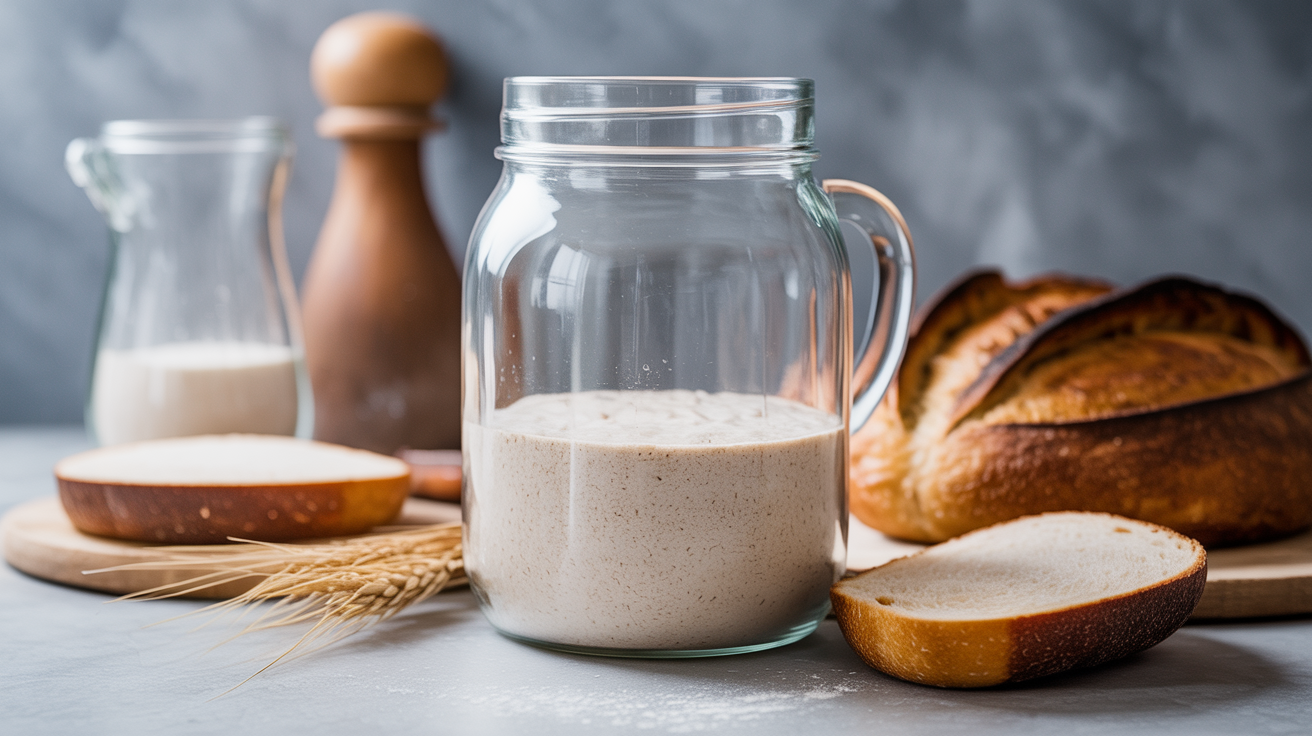
Making your own sourdough starter is one of those projects that sounds complicated until you actually do it. All you need is flour, water, and a warm spot in your kitchen. Wild yeast and beneficial bacteria are already present on your flour and in the air around you. Your job is just to give them the right conditions to thrive.
This guide walks you through the full process of creating a sourdough starter day by day, from the first mix to the moment it's ready to leaven a real loaf of bread. Expect the whole thing to take about seven days, sometimes a little longer depending on your kitchen temperature.
What You Need Before You Start
The ingredient list is short, but the details matter.
Flour: Use whole wheat flour or whole rye flour for the first few days. The bran on these whole grains carries more wild yeast and bacteria than refined white flour does, which gives your starter a faster, more reliable start. Once it's active, you can switch to bread flour or all-purpose if you prefer.
Water: Tap water is fine in most places. If yours is heavily chlorinated, let it sit out for an hour or use filtered water. Room temperature is ideal, somewhere around 70-75°F (21-24°C).
A jar: A wide-mouth quart jar works well. Clear glass lets you see the bubbles and track the rise. Avoid tight-sealing lids; the starter produces gas, and pressure can build up. A loose lid, a plate set on top, or a cloth secured with a rubber band all work.
A kitchen scale: Weighing your flour and water gives you consistent results. Volume measurements for flour vary too much depending on how the bag was packed.
You do not need any commercial yeast. The whole point of making a sourdough starter from scratch is capturing wild yeast, and adding commercial yeast would undermine that.
The Day-by-Day Schedule
Here is what to do each day and what to look for. Feedings are done once a day for the first few days, then twice a day once activity picks up.
| Day | Action | Flour | Water | What to Expect |
|---|---|---|---|---|
| 1 | Mix starter | 50g whole wheat (about ¼ cup) | 50g (about 3½ tbsp) | Paste-like, no activity yet |
| 2 | Discard + feed | 25g whole wheat (2 tbsp) | 25g (1½ tbsp) | Possibly a few bubbles |
| 3 | Discard + feed | 25g whole wheat (2 tbsp) | 25g (1½ tbsp) | More bubbles, sour smell developing |
| 4 | Discard + feed | 25g whole wheat (2 tbsp) | 25g (1½ tbsp) | Noticeable rise, active bubbling |
| 5 | Discard + feed (2x) | 25g whole wheat (2 tbsp) per feed | 25g (1½ tbsp) per feed | Doubles between feedings |
| 6 | Discard + feed (2x) | 25g whole wheat or bread flour | 25g | Consistent rise and fall |
| 7+ | Discard + feed (2x) | 25g bread flour (3 tbsp) | 25g | Passes float test, ready to bake |
The discard in the table above refers to removing most of your starter before each feeding. Keep about 25g (a tablespoon or two) and add fresh flour and water to it. Without discarding, the jar would overflow and the acids would build up to the point where the yeast can't function.
Day 1: The First Mix
Combine 50g of whole wheat flour with 50g of room-temperature water in your jar. Stir it vigorously until no dry flour remains. The texture should be a thick paste. Scrape down the sides, mark the level on the outside of the jar with a rubber band or a piece of tape, then cover loosely and leave it somewhere warm.
A spot around 75-80°F (24-27°C) is ideal. The top of the refrigerator (not inside it), near a water heater, or inside an oven with just the light on are common choices. Temperature is the single biggest factor in how fast your starter develops.
Don't worry if nothing happens on Day 1. It's normal.
Days 2-3: First Signs of Life
On Day 2, you might see a few small bubbles at the edges or on the surface. The smell at this point is often funky in an unpleasant way, sometimes like gym socks or over-ripe fruit. That's bacteria doing their early work, not a sign that something is wrong.
Discard all but about 25g of your starter, then add 25g of whole wheat flour and 25g of water. Stir well, mark the new level, and cover again.
By Day 3, you should see more visible bubbling and the smell usually shifts toward something more sour and almost yeasty. The starter may show a small rise. This is the fermentation process taking hold.
Days 4-5: Things Get Interesting
This is where creating a sourdough starter starts to feel real. Around Day 4, many starters show a noticeable rise between feedings and fall back down before the next one. The smell becomes distinctly sour, sometimes with a fruity or tangy note underneath.
Continue the same discard-and-feed routine once daily through Day 4. On Day 5, switch to feeding twice a day, roughly 12 hours apart. This is because an active starter burns through its food faster and the more frequent feedings keep the yeast population healthy and growing.
If your starter seems sluggish and isn't showing much activity by Day 5, a few things can help:
- Move it somewhere warmer. Cold kitchens slow everything down significantly.
- Try adding a small amount of rye flour (10-15g) in your next feeding. Rye is particularly rich in wild yeast.
- Make sure you're discarding enough before feeding. Too much old starter dilutes the fresh food too quickly.
Days 6-7: Testing for Readiness
By Day 6, a healthy starter should be doubling in size within 4-8 hours of each feeding, then slowly falling back down. You'll see a network of bubbles throughout the jar, not just on top. The smell is sour but pleasant, similar to vinegar or yogurt.
The classic readiness test is the float test: drop a small spoonful of starter into a glass of water. If it floats, there's enough gas production to leaven bread. If it sinks, give it another day or two of twice-daily feedings.
A few other signs that your starter is ready:
- It reliably doubles between feedings
- You can see a clear "high water mark" left on the jar as it falls back down
- The texture is webby and airy when you stir it
- The smell is pleasantly sour, not harsh or acetone-like
Once your starter passes these checks, you're ready to bake. For a full walkthrough from here, head over to your first sourdough loaf: a step-by-step beginner's guide.
Keeping Your Starter Alive Long-Term
After the initial build phase, you have two options for maintaining your starter.
If you bake frequently (two or more times a week), keep it on the counter and feed it once or twice daily.
If you bake occasionally, store it in the refrigerator. Cold temperatures slow the yeast down dramatically, so you only need to feed it once a week. Take it out the night before you plan to bake, give it a feeding at room temperature, and it will be active and ready by morning.
For the full details on ratios, timing, and how to tell when a refrigerated starter needs attention, the guide on how to feed and maintain a sourdough starter covers everything you need.
One thing that trips up a lot of beginners: hooch. If a grayish liquid pools on top of your starter, that's alcohol produced by hungry yeast. It smells sharp and unpleasant. It's not ruined. Pour it off or stir it back in, then feed the starter. Going forward, feed it before that liquid appears.
Frequently Asked Questions
My starter smells terrible. Is it ruined?
Probably not. In the first three days, most starters go through a phase that smells genuinely bad, somewhere between cheese and acetone. That's an early wave of bacteria that eventually gets outcompeted by the more desirable lactic acid bacteria. Keep feeding it and the smell typically improves by Day 4 or 5. The one smell to watch for is pink, orange, or fuzzy mold growth on the surface. If you see visible mold, discard the whole batch and start over. A bad smell without visible mold is almost always normal.
Can I use all-purpose flour instead of whole wheat to start?
You can, but it will likely take longer. Whole wheat and rye flour contain more wild yeast and nutrients than refined white flour, which gives the fermentation a head start. If all-purpose is all you have, go ahead and use it, just be patient and expect the process to take 10-14 days instead of 7.
What temperature is too cold for a starter?
Below 65°F (18°C), fermentation slows to a crawl. You'll see very little activity between feedings and the process can stall entirely. If your kitchen runs cold in winter, try a proofing box set to 75-78°F, or find the warmest spot in your home. Even a few degrees makes a big difference.
Why do I have to discard so much starter?
The discard step controls two things: the total volume in your jar (without it, the starter would overflow within a week), and the ratio of old acidic starter to fresh food. If you keep too much old starter and add too little flour, the acid level climbs too high and the yeast can't function properly. The discard doesn't have to go to waste. Once your starter is active, use it in pancakes, crackers, pizza dough, or flatbreads.
My starter was rising well but suddenly stopped. What happened?
A few common causes: the kitchen cooled down (especially in fall and winter), the starter ran out of food between feedings (try feeding twice a day), or you introduced a different flour that the culture needed time to adjust to. If your starter suddenly stops rising after working well for weeks, also check out the troubleshooting guide for a sourdough starter that isn't rising for a full breakdown of what to look for.