Getting Started
How to Store Homemade Bread So It Stays Fresh
Counter, bread box, or freezer? Learn the right way to store homemade bread by crust type, and why the fridge is the worst place for it.
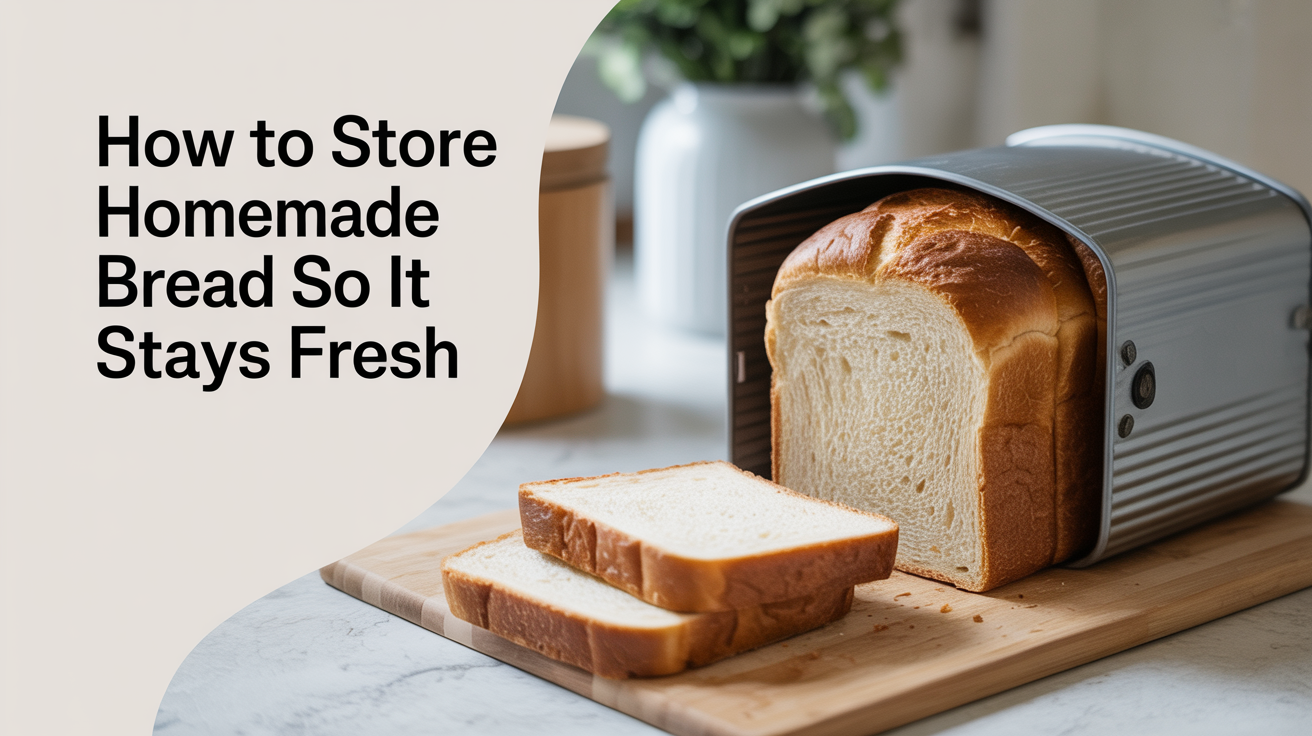
The right storage method depends on what kind of bread you baked and how soon you plan to eat it. A crusty sourdough boule and a soft sandwich loaf need different handling, and putting either one in the fridge is almost always the wrong move.
At a Glance
- Never refrigerate plain bread. Cold temperatures speed up staling more than room temperature air does, even though it feels like the "safer" choice.
- Crusty bread wants to breathe: store cut-side down on a board, or wrapped in paper, not plastic.
- Soft bread wants moisture locked in: a sealed bag or airtight container is correct for sandwich loaves and enriched doughs.
- Slice bread before freezing, not after. Pre-sliced loaves go straight from freezer to toaster with no thawing step.
- Let bread cool completely (1 to 2 hours for a full loaf) before wrapping it. Trapped steam is the single most common cause of a gummy crust or soggy bag.
- Mold means the loaf is done. Discard it entirely; do not cut around visible mold and eat the rest.
Why the Fridge Ruins Bread
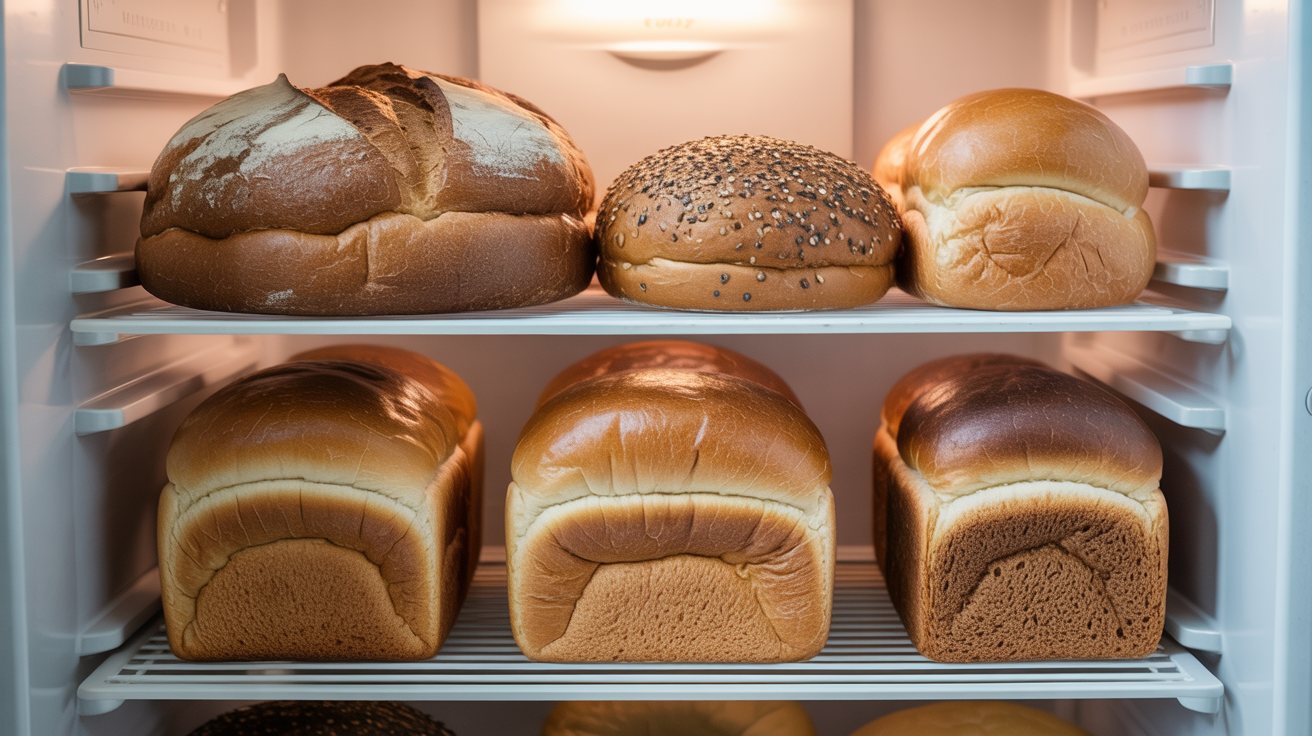
Staling is not simply moisture escaping from the loaf. It is driven by a process called starch retrogradation. When bread bakes, the starch granules in the flour absorb water and swell into a soft, open gel. As the loaf cools and sits at room temperature over the next day or two, those starch chains slowly reorganize into a tighter, more crystalline structure. The result is a firmer, drier crumb that feels stale even if the loaf still has plenty of moisture locked inside.
Cold temperatures accelerate retrogradation dramatically. According to Wikipedia's summary of the staling process, bread "stales most rapidly at temperatures just above freezing," and refrigeration increases the staling rate even though it slows mold growth, which is exactly the counterintuitive trap most home bakers fall into. A loaf stored in the refrigerator for one day will feel noticeably staler than a loaf left on the counter for three. The fridge also pulls surface moisture away from the crumb faster than room-temperature air does, compounding the problem. The crust on a crusty loaf turns leathery and soft rather than crisp; a sandwich loaf comes out dense and dry.
The only time refrigerating bread makes practical sense is when it contains perishable fillings that require cold storage for food safety, like a cheese-stuffed roll or an egg-washed braided loaf with custard inside. For plain bread, the counter and the freezer are the two tools you actually need, because freezing works on the opposite principle from refrigeration: it drops the loaf's temperature far enough, fast enough, to essentially pause the retrogradation process rather than accelerate it.
Staling Speed at a Glance
| Storage temperature | Approximate time to noticeable staling | Why |
|---|---|---|
| Freezer (0°F / -18°C) | Weeks to months | Retrogradation is nearly halted; moisture stays locked in the starch structure |
| Room temperature (68 to 72°F) | 1 to 3 days, crust-dependent | Retrogradation proceeds at its normal, moderate pace |
| Refrigerator (35 to 40°F) | Within 24 hours | Cold accelerates retrogradation; this range is close to the temperature where it happens fastest |
Storing Crusty Bread: Sourdough, Country Loaves, Baguettes
Crusty breads are baked specifically to develop a dry, crackling exterior that contrasts with an open, moist crumb. The challenge is that crust and crumb have opposite storage needs: the crumb wants to stay moist, and the crust wants to stay dry. Getting the balance right means avoiding anything that traps humidity against the exterior.
Cut-Side Down on a Board
The simplest storage method for a partially cut loaf is to set it cut-side down on a wooden cutting board and leave it uncovered. The cut face presses against the board and stays protected from drying out, while the intact crust continues to breathe. Many bakers keep a sourdough boule or country loaf this way for two to three days and find it holds up better than anything sealed in a bag.
If your kitchen is unusually warm or dusty, draping a clean dish towel loosely over the loaf gives a little protection without sealing the crust off from the air.
Paper Over Plastic for Wrapped Loaves
When you do wrap a crusty loaf, paper is the right choice. Plastic bags trap moisture against the crust, turning it soft and rubbery within a few hours. A paper bag, a loose sheet of parchment, or a cloth bread bag allows enough airflow to keep the crust from turning soggy while slowing down crumb drying. On a warm, humid day, the crust will soften somewhat even in paper, but it will still be better than plastic.
For whole uncut loaves, a bread box offers a useful middle ground. It keeps out dust and provides a slightly more stable microenvironment than open counter air, while still allowing some airflow. Most crusty loaves stored at room temperature are best eaten within two to three days. Sourdough bread typically keeps a day or two longer than a yeasted loaf because its lower pH slows mold growth, the same acidity that gives it its characteristic tang.
Kitchen humidity changes these numbers more than most bakers expect. In a dry climate or a well-ventilated kitchen, a paper-wrapped crusty loaf can hold its texture close to three full days. In a humid kitchen, especially during summer, the same loaf may start softening at the crust within a single day regardless of what it is wrapped in, simply because the surrounding air has nowhere to pull moisture from the loaf. If you live somewhere humid, lean toward eating crusty bread sooner or moving extras to the freezer a day earlier than the general guideline suggests.
Storing Soft Bread: Sandwich Loaves, Rolls, Enriched Doughs
Soft breads work on different logic. They already have a tender, moist crumb from added fats, eggs, or milk, and their crust is thin and soft to begin with. Your goal here is to hold moisture in, not let the crust breathe. If you are just getting started and baked your first loaf following something like our beginner's guide to baking bread, a simple sandwich-style loaf falls into this category.
Plastic or an Airtight Container
A zip-top bag with the air pressed out works well for soft loaves. Slice off what you need and reseal the bag between uses. An airtight container of the right size works the same way. Stored this way at room temperature, a soft homemade sandwich loaf will hold up for three to four days before quality starts to drop noticeably.
If you know a loaf will sit untouched for more than four days, the freezer is a far better option than leaving it out and hoping for the best. Soft bread also freezes and revives more cleanly than crusty bread, since there is no crust texture to lose.
How to Freeze Bread the Right Way
Freezing is the most practical storage tool for homemade bread, particularly if you bake a full loaf but only need a few slices at a time. Handled correctly, frozen bread comes back well. Done carelessly, it picks up off-flavors and a cardboard texture that no amount of toasting fully fixes.
Slice Before Freezing
Pre-slicing before freezing is the most useful habit to build. Individual slices go straight from the freezer into the toaster without any thawing, which means you can have fresh-tasting bread in minutes on any morning. A whole frozen loaf, by contrast, needs to thaw completely before you can cut it without the knife dragging through the frozen interior.
Wrap slices or partial loaves tightly in plastic wrap first, then seal everything inside a zip-top freezer bag with as much air pushed out as possible. The double layer matters: air exposure over weeks causes freezer burn, which shows up as dry, off-tasting patches. Write the date on the bag. Most homemade bread tastes best within two to three months of freezing; it stays safe beyond that point but quality falls off.
For whole crusty loaves you want to freeze intact, wrap tightly in plastic wrap and then foil. Let the loaf thaw at room temperature on the counter before refreshing it in the oven, which usually takes 2 to 4 hours for a standard 900-gram loaf depending on your kitchen temperature.
Reheating and Refreshing
Slices from the freezer toast directly from frozen in a standard toaster on a medium setting. No thawing required.
For larger pieces or a whole thawed loaf, use the oven. Set it to around 350°F (175°C). A crusty loaf that has thawed at room temperature will re-crisp noticeably after 8 to 12 minutes on the oven rack. A loaf that is still partially frozen needs 15 to 20 minutes; press the center with your palm before pulling it out to confirm the crumb is warm through. A light mist of water sprayed on the crust before it goes in, or placing the loaf directly on the rack over a small pan of water, can help the exterior blister and crisp up the way it did when it first came out of the oven.
As a worked example, a 900-gram sourdough boule frozen whole and thawed overnight on the counter typically needs about 10 minutes uncovered at 350°F to bring the crust back to something close to its original crackle. Skip the refresh step entirely and the same loaf will taste noticeably duller and chewier at the crust, even though the crumb underneath is perfectly fine. The oven step is what separates "thawed bread" from bread that actually tastes freshly baked again.
Storage Methods at a Glance
| Method | Best For | Approximate Shelf Life |
|---|---|---|
| Counter, cut-side down on board | Crusty sourdough, country loaves | 2 to 3 days |
| Paper bag or cloth bag | Crusty loaves of any kind | 2 to 3 days |
| Bread box | Any loaf | 3 to 4 days |
| Plastic bag, sealed | Soft sandwich bread, enriched loaves | 3 to 5 days |
| Refrigerator | Bread with perishable fillings only | 3 to 5 days (stales faster) |
| Freezer, well wrapped | Any loaf | 2 to 3 months |
Frequently Asked Questions
Why does homemade bread go stale faster than store-bought?
Commercial bread typically contains preservatives, emulsifiers, and dough conditioners that extend shelf life well beyond what a home-baked loaf can achieve. Bread made from just the four basic ingredients has none of those additives. That is not a flaw in the recipe; it is the natural trade-off of baking without industrial stabilizers. Plan to eat fresh bread within two to three days or move the rest to the freezer.
Should I let the loaf cool completely before storing it?
Yes, fully and without shortcuts. A warm loaf placed in a bag or container traps the steam still escaping from the crumb. That steam condenses inside the bag, making the interior gummy and the crust rubbery. Set the loaf on a wire rack and let it cool to room temperature before wrapping. For a full-sized loaf, that typically means waiting one to two hours; a dense, high-hydration sourdough can take closer to two hours because it holds more residual heat. The same rule applies whether you made a no-knead loaf or a long-fermented sourdough.
Can stale bread be revived?
Often, yes. For a crusty loaf that has dried out but shows no mold, run the oven to 350°F and place the loaf directly on the rack for 8 to 12 minutes. The heat drives residual moisture from the crumb back toward the surface and re-crisps the exterior. It will not taste like it did fresh out of the oven, but it will be noticeably better than eating a cold stale slice. Soft sandwich bread responds less dramatically to this treatment. Very stale bread that has passed the point of pleasant eating works well as French toast, bread pudding, or breadcrumbs.
How do I know if bread has gone bad rather than just stale?
Stale bread is dry, dense, and flavorless but safe to eat. Bread that has gone bad will show visible mold, which appears as fuzzy patches in green, black, white, or pink. According to Wikipedia's overview of mold, some mold species produce mycotoxins, toxic compounds that can remain in the surrounding food even where no visible growth is present, which is why food safety guidance is to discard the whole loaf rather than cut around a moldy patch. Bread has a soft, porous crumb that mold can spread through invisibly well beyond the patch you can see. If the bread smells off, sour in an unpleasant way, or feels unusually wet or slimy on the surface, discard it as well, even without visible mold.
Does sourdough really keep longer than yeasted bread?
In practice, yes. The acetic and lactic acids from fermentation lower the loaf's pH, which slows mold growth. A well-made sourdough country loaf often holds for three to four days at room temperature, a day or so longer than a comparable yeasted loaf. The difference is most noticeable in humid kitchens, where mold pressure is higher for any bread.
Is it safe to freeze bread indefinitely?
Freezing keeps bread safe well past the two to three month quality window; a properly sealed loaf will not spoil in the freezer the way it would on the counter. What degrades over months in the freezer is quality, not safety: ice crystals slowly damage the crumb structure, and any air pocket in the wrapping leads to freezer burn. For best texture, plan to use frozen homemade bread within three months, and always double-wrap (plastic first, then a freezer bag or foil) to keep air out.