Sourdough
How to Revive a Neglected or Forgotten Sourdough Starter Safely
Found your sourdough starter shoved in the back of the fridge? Here's how to tell if it's salvageable and the feeding schedule that brings it back.
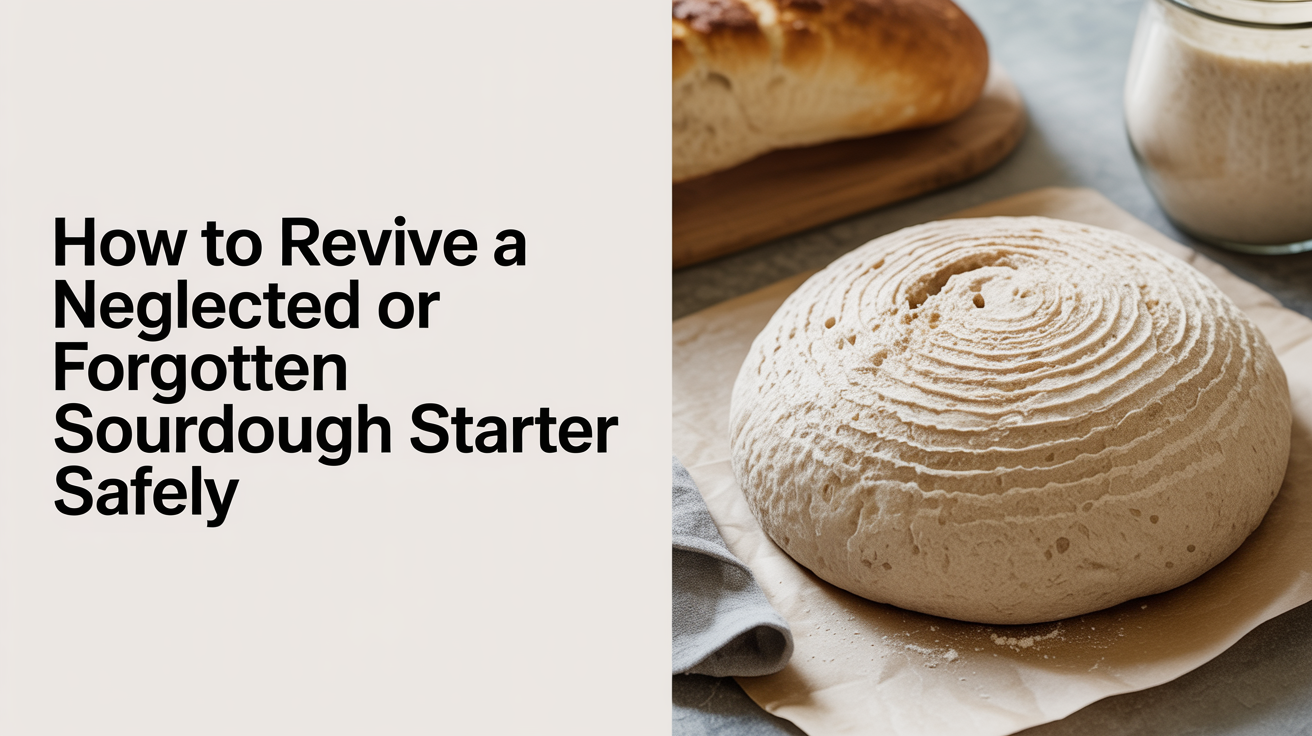
You open the fridge, push aside three jars of condiments, and there it is: the starter you swore you'd feed every week. It's been a month. Maybe two. There's a layer of dark liquid pooled on top and the whole thing smells like nothing you'd want near a mixing bowl. Before you dump it down the drain, know this: most neglected starters come back. The question isn't whether you can revive a sourdough starter that's been sitting untouched, it's whether what's in the jar is safe to work with in the first place. That part matters more than any feeding schedule.
Check the Jar Before You Do Anything Else
Sourdough starter is just flour, water, and a colony of wild yeast and bacteria that ferments in a fairly predictable way. Left alone, it runs out of food, the yeast activity slows way down, and the liquid part of the dough separates and rises to the top. That liquid is called hooch, and on its own it's a normal sign of a hungry starter, not a ruined one.
Hooch is usually clear to grayish, sometimes tinted brown if you feed with whole wheat or rye. It smells sharp, boozy, almost like nail polish remover or sour beer. That smell is alcohol, a byproduct of the yeast fermenting sugars with nothing else to eat. None of this means the starter is dead. Pour the hooch off, or stir it back in if you like a more sour result, and move on to feeding.
What you're actually watching for is any hint of pink, orange, or red discoloration, or fuzzy patches of mold on the surface or up the sides of the jar. That's a different situation entirely, and it's not a judgment call.
When to Toss It and Start Over
This is the one place in sourdough baking where there's no gray area, so it's worth stating plainly: if you see pink, orange, or red streaks, or any fuzzy growth, throw the whole thing out. Don't try to scoop around it, don't feed it "just to see," and don't scrape off the top layer and keep the rest. Those colors point to bacterial or mold contamination that can produce compounds you don't want to eat, and stirring a contaminated starter mixes whatever's growing on top through the entire jar.
A starter that's just gray, watery, and separated, with no color other than the flour and hooch itself, is not in this category. Smell is your other check. Sour, yeasty, beery, even a little like acetone: all normal. A smell that's rotten, like something spoiled in the fridge, or that makes you want to hold the jar at arm's length for a different reason than the vinegar tang, is a sign to discard rather than gamble.
If you do need to start clean, building a starter from scratch only takes flour, water, and about a week of patience, so it's not the setback it feels like in the moment.
The Revival Schedule: Feeding Your Way Back to Active
Assuming your starter passed the check above, reviving it is mostly a matter of feeding on a tight, consistent schedule until the yeast population rebuilds. There's no exact number of days that works for every starter; a lot depends on how long it sat, how warm your kitchen runs, and how strong the culture was before you neglected it. Plan on somewhere in the three to five day range, and don't be surprised if it takes a bit longer.
Day one. Scrape out all but about 1 to 2 tablespoons of the starter and discard the rest, hooch included. To that small amount, add equal parts flour and water by weight, something like 30 grams of each is a workable starting point for a small jar. Stir until no dry flour remains, scrape down the sides, and loosely cover. At this stage you're mostly feeding to dilute out the stale, alcohol-heavy environment and give the surviving yeast fresh food.
Day two. You likely won't see much rise yet, and that's expected. Discard down to that same 1 to 2 tablespoons again and feed with fresh equal-weight flour and water. If your kitchen is on the cooler side, this is a good stretch to look at a proofing time and temperature adjustment approach, since a starter recovers faster somewhere in the mid to high 70s Fahrenheit than it does on a cold counter.
Days three through five. Keep discarding and feeding once or twice a day, watching for the first real signs of life: bubbles scattered through the mixture, a slight dome or rise between feedings, and a smell that's turned from boozy or flat back toward something more like yogurt or ripe fruit. Once you see a starter that roughly doubles within 4 to 8 hours of a feeding and smells pleasantly sour rather than harsh, you're back in business.
Two feedings a day speeds up recovery more than one, since it keeps the yeast supplied with fresh sugars before it drifts back into survival mode. Once a day works too, it just stretches the timeline out further.
How Much to Discard
The discard amount matters more than people expect. Keeping too much of the old, weakened starter at each feeding dilutes the fresh flour and water less, so the stale culture takes longer to get outcompeted by an active one. Discarding down to a tablespoon or two and feeding a full equal-weight portion of flour and water gives the recovering yeast room to multiply without fighting through a jar full of tired starter. If throwing out that much flour bothers you, most of what you scrape out is still fine for sourdough discard recipes once the starter smells normal again, though early on, while the smell is still sharp and boozy, it's better baked at high heat than eaten raw.
Signs It's Genuinely Active Again
Bubbles alone don't mean a starter is ready to bake with. Plenty of neglected starters throw off bubbles within a day of the first feeding simply because leftover yeast is waking up, even before the population has recovered enough to leaven a loaf. Wait for a starter that predictably rises and falls on a schedule tied to its feedings, a dome or crown you can watch develop over a few hours, and a smell that's settled into something pleasantly tangy rather than sharp like paint thinner.
The float test is a rough, low-stakes way to gauge readiness: drop a small spoonful into a glass of water. If it floats, there's enough gas trapped in the structure to suggest active fermentation. If it sinks, that's not a death sentence, just a sign to keep feeding a little longer. Some very reliable starters still sink the float test and bake beautifully, so treat it as one data point rather than a verdict.
What Slows Down a Revival
A few habits stall the process without anyone realizing it. Feeding too infrequently, once every two days instead of once or twice daily, leaves the starter running out of food again before it rebuilds strength. A genuinely cold kitchen, especially a drafty spot near a window, adds real time since yeast activity slows below room temperature. And switching flour types mid-revival, jumping between all-purpose and whole wheat feeding after feeding, makes it harder to read consistent progress because each flour ferments a little differently.
If you've fed on schedule for a full week with no real rise and a smell that stays flat or off in a way that doesn't match the hooch-versus-mold distinction above, it may genuinely be a spent culture rather than a slow one. At that point, starting a new batch from scratch is usually faster than pushing another week of feedings into a starter that isn't responding.
Frequently Asked Questions
Can I revive a sourdough starter that's been in the fridge for months?
Often, yes, as long as there's no pink, orange, red, or fuzzy growth in the jar. A gray layer of hooch on top and a strong alcohol smell are normal after months of neglect and don't mean the starter is unsafe. Expect the revival to take a bit longer than a starter that was only forgotten for a couple of weeks.
Is it safe to just pour off the hooch and keep feeding?
Yes. Hooch is a normal separation of liquid that happens as a hungry starter runs low on food. You can pour it off or stir it back in for extra sourness; either way it doesn't affect the safety of the starter underneath, as long as there's no discoloration or mold present.
How many days does it usually take to fully revive a starter?
Most neglected starters come back within three to five days of consistent feeding, though this varies a lot with how long it sat and how warm your kitchen is. Some bounce back faster, others need closer to a week. Watch for a reliable rise and a pleasant sour smell rather than counting days.
What if my starter smells bad even after several feedings?
A smell that stays flat, off, or unpleasant well into the feeding schedule, without the color changes that signal mold, is a sign the culture may be too weak to recover on a useful timeline. At that point, starting a fresh starter is usually the quicker path than pushing another week of feedings into one that isn't responding.
Do I need to feed a revived starter differently once it's active again?
No. Once it's showing a consistent rise and fall and a normal sour smell, switch back to your regular maintenance routine, whether that's a daily counter feeding or a weekly fridge feeding. A guide to feeding and maintaining a starter covers how to keep it steady so you don't end up back at square one.